


 support@brosisco.store
Table of Contents
- Understanding Modern Rustic Style
- Step 1: Choose a Neutral Color Palette as Your Foundation
- Step 2: How to Mix Rustic and Modern Decor Without Overwhelming the Space
- Step 3: Select Minimalist Furniture with Clean Lines and Raw Materials
- Step 4: Layer Textures and Natural Fibers for Depth
- Step 5: Modern Rustic Living Room Ideas for Functional Styling
- Step 6: Style Rustic Shelves with Intention and Balance
- Step 7: Add Lighting and Final Touches
- Frequently Asked Questions
Last Updated: October 3, 2026
Understanding Modern Rustic Style
Modern rustic home accents blend raw, natural materials with clean, minimalist design. Think reclaimed wood paired with sleek furniture. Exposed beams meet matte finishes. The result feels warm and inviting, not cluttered or dated.
This aesthetic balances opposing forces: rustic elements bring texture and history, while modern design brings simplicity and restraint, creating spaces that feel grounded and current.
People drawn to modern rustic style seek meaningful, curated pieces that tell a story while fitting seamlessly into contemporary spaces. This guide shows you how to style modern rustic home accents so your space feels intentional.
The key to success is restraint. You're not filling every corner with distressed finishes. You're selecting specific pieces that anchor each room and let them breathe.
Step 1: Choose a Neutral Color Palette as Your Foundation
Your color palette is the foundation for everything else. Start with neutrals: whites, creams, soft grays, warm taupes, and muted beiges.
Understanding Undertones
Neutrals come in three undertone families: warm, cool, and true. For modern rustic, warm and true neutrals work best because they complement natural wood and earthy materials.
Warm neutrals include:
- Cream with golden or peachy undertones (not stark white)
- Warm grays with beige or taupe undertones (not blue-gray)
- Soft taupes and greiges (gray-beige blends)
- Warm whites with ivory or champagne undertones
Cool grays create visual tension against warm wood tones. If you use them, pair them with cooler metals like brushed steel or matte black, not warm brass or bronze.
Matching Neutrals to Wood Tones
Your wall color must harmonize with your wood choices. If you're using honey-toned or golden wood (common in reclaimed pieces), pair it with warm creams, warm grays, or soft taupes.
Test paint samples on your walls in natural and artificial light for several days. Neutrals shift dramatically depending on time of day and bulb temperature.
Earthy Accent Tones
Earthy tones (terracotta, soft sage, warm olive, muted clay) work as secondary colors, not primaries.
The Three-to-Four Color Rule
Pick 3-4 neutral base colors and stick with them across rooms: warm white (walls), warm gray (secondary walls), warm taupe (textiles), and natural wood tones (furniture).
Avoiding the Mistake: Pure White
Avoid pure white walls. Instead, use off-white or cream with warm undertones to soften the space and make modern rustic home accents feel cohesive.
Step 2: How to Mix Rustic and Modern Decor Without Overwhelming the Space
Start with a modern base: minimalist furniture with clean lines and simple silhouettes. This foundation prevents the space from feeling chaotic.
Layer in rustic elements intentionally: one reclaimed wood accent wall or one large distressed piece per room, not multiple.
Balance matters more than quantity. A sleek sofa with a weathered wood coffee table works; add weathered shelves, distressed mirror, and reclaimed wall and it feels chaotic.
Let modern elements be the majority and rustic elements be the accent to prevent how to mix rustic and modern decor from feeling like a design mistake.
Step 3: Select Minimalist Furniture with Clean Lines and Raw Materials
Minimalist furniture is your foundation. Look for pieces with clean lines, simple geometry, and no unnecessary detail: straight-silhouette sofas, tapered-leg tables, simple shelving.
Raw materials matter: natural wood, metal, stone, and linen feel honest and unpretentious, supporting the rustic side of modern rustic home accents without sacrificing the modern aesthetic.
Choose matte finishes over shiny ones, they feel more grounded, less formal, and hide dust better than glossy surfaces.
Wood selection is key: knotty, reclaimed, or visibly grained wood shows material history. Avoid overly polished or uniform wood, choose character over perfection.
Metal accents in black, bronze, or natural steel add an industrial edge while wood keeps the space warm.
Step 4: Layer Textures and Natural Fibers for Depth
Texture transforms a flat, boring space into something tactile and inviting. This is where modern rustic home accents come alive.
Start with natural fibers: linen, wool, cotton, jute, and hemp feel warm and organic, aging beautifully over time.
Layer textures deliberately: smooth linen sofa with chunky knit throw, sleek wood table with woven jute runner, concrete walls with wool rug, clean-lined shelves with stacked books and woven baskets.
Pair smooth surfaces with textured ones and hard materials with soft ones to create visual interest without clutter.
Textile layering adds warmth and softness: throw blankets, area rugs, and cushions in natural fibers and neutral colors (cream, gray, warm taupe).
Woven baskets add texture and function. Use them for storage, but let them be visible. Baskets in natural fibers like seagrass, rattan, and woven straw all work beautifully.
Step 5: Modern Rustic Living Room Ideas for Functional Styling
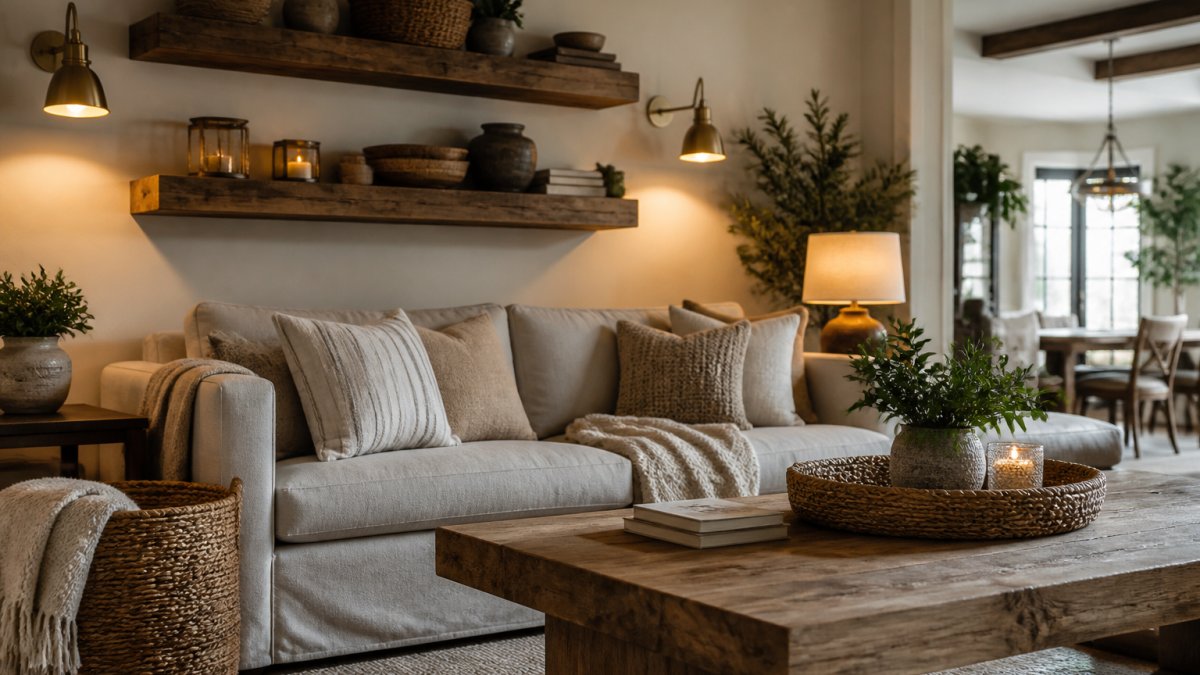
Your living room is where modern rustic home accents shine. It needs to feel both beautiful and livable.
Start with a neutral sofa (light gray, cream, or warm beige) paired with a natural wood coffee table. Add texture with a wool area rug and linen throw pillows.
Create one strong focal point, a reclaimed wood accent wall, large artwork, or fireplace, to prevent the room from feeling scattered.
Layer in functional storage: a wooden bookshelf styled with books, woven baskets, and a few carefully chosen pieces. Keep styling intentional, don't fill every shelf.
Add warmth through lighting: warm-toned bulbs in simple brass, bronze, or black metal fixtures create coziness. Avoid chrome or shiny finishes.
Add simple potted plants on shelves or in corners in neutral pots to add life and soften the space.
Step 6: Style Rustic Shelves with Intention and Balance
Styled shelves are the heart of modern rustic home accents, but there's a difference between styled and cluttered shelves.
Use the rule of thirds: divide each shelf into three sections, one open, one with books stacked horizontally and vertically, one with a few carefully chosen pieces.
Mix heights and shapes: stack books vertically and horizontally, place plants next to baskets, vary visual weight so no shelf feels heavy.
Keep it minimal. If a shelf looks crowded, remove something. Empty space is part of the design.
Stick to your neutral base colors for shelf styling, with perhaps one accent color in a plant pot or book cover.
Incorporate natural materials: woven baskets, wooden boxes, stone bookends, and linen for layering.
The goal is balance: between full and empty, rough and smooth, vertical and horizontal elements.
Step 7: Add Lighting and Final Touches
Lighting is critical for modern rustic styling. Poor lighting makes warm wood look dull or spaces feel cold; strategic lighting transforms the space.
Color Temperature and Material Compatibility
Choose warm-toned bulbs rated at 2700K (Kelvin). This color temperature mimics candlelight and creates a welcoming atmosphere.
If using 4000K or 5000K bulbs for task lighting, keep them in separate zones away from rustic focal points.
Layering Your Lighting Strategy
Don't rely on a single overhead fixture. Layer three types of light:
-
Ambient Lighting: Overhead fixtures or flush mounts with dimmers to adjust warmth and intensity. Dimmed to 60-70%, overhead light feels intentional rather than harsh.
-
Task Lighting: Focused light for reading, working, or cooking via desk lamps, under-cabinet lights, or reading lights at 2700K.
-
Accent Lighting: Subtle light that highlights architectural features, artwork, or focal points. Wall sconces flanking a reclaimed wood accent wall, or a small spotlight on floating shelves. This creates depth and draws the eye to your best design elements.
Fixture Style and Material Pairing
Fixture design matters as much as bulb temperature. Simple metal fixtures in black, bronze, natural steel, or aged brass all work beautifully.
Match fixture materials to your accent metals:
- If your furniture has black metal legs or hardware, choose matte black or blackened steel fixtures.
- If your decor includes brass or copper accents, choose aged brass or warm bronze fixtures.
- If your space is minimalist with steel details, choose brushed steel or matte black fixtures.
Fixture shape should be simple: straight lines, geometric forms, or understated industrial shapes. Avoid ornate shades, decorative swags, or overly detailed designs.
Placement for Maximum Impact
- Reclaimed wood accent walls: Place a wall sconce or small pendant on either side to highlight texture and grain.
- Styled shelves: Use a small picture light or shelf-mounted LED strip (warm 2700K) to add dimension without glare.
- Seating areas: Position a floor lamp or table lamp beside seating for ambient warmth and task light for reading.
- Entryways: Use a simple pendant or flush mount at the entry to set the tone immediately.
Bulb Type Considerations
LED bulbs are now standard and energy-efficient. Choose "warm white" or "soft white" LEDs rated 2700K. Avoid "daylight" or "cool white" LEDs.
Incandescent bulbs naturally produce 2700K light but use more energy and generate heat. If you use them, ensure fixtures are rated for incandescent wattage.
Final Touches That Ground the Space
Once lighting is in place, add finishing details:
- A few carefully chosen books on shelves (stack some horizontally, some vertically)
- A simple vase with dried branches or pampas grass in a neutral ceramic pot
- A woven throw blanket draped casually over the sofa arm
- Candles in glass holders on a shelf or side table (unscented or lightly scented)
- A small potted plant in a neutral ceramic or concrete pot
These touches make the space feel lived-in and intentional. They're not random. They're chosen pieces that support your overall aesthetic and create visual interest without clutter.
Sustainable and Intentional Styling
Consider sourcing final touches sustainably. Reclaimed wood shelves, vintage finds from thrift stores, and handmade ceramics or woven pieces all fit beautifully. These items have history and character.
Frequently Asked Questions
What's the best way to style modern rustic home accents without making a space look cluttered?
The key is balance and intentional layering. Start with a neutral color palette of warm whites, grays, and earthy tones, then add rustic elements like reclaimed wood or distressed finishes sparingly. Use negative space to let each piece breathe, and group similar items together rather than scattering them. Think 'curated' rather than 'collected', every accent should serve a purpose, whether functional or visual.
How do I incorporate modern rustic accents on a budget without sacrificing quality?
DIY approaches work well for modern rustic styling. Hunt for reclaimed wood pieces at salvage yards or thrift stores and refinish them yourself. Layer affordable natural textiles like jute, linen, and cotton to create depth. Woven baskets and stone accents are often budget-friendly, and you can create your own accent pieces by distressing existing furniture with sandpaper and matte finishes. Focus spending on statement pieces like a quality wooden shelf or leather accent, then fill in with budget finds.
What color palettes work best for modern rustic home accents?
Neutral color palettes form the backbone of modern rustic design. Combine warm whites, soft grays, warm beiges, and muted greens with earthy tones like terracotta and warm browns. These colors reflect the natural materials central to the style, wood, stone, and raw textiles. Limit accent colors to one or two muted shades, and let natural wood tones and organic textures provide visual interest rather than bold colors.
How important is lighting in creating a modern rustic atmosphere?
Lighting is essential to the cozy, functional feel of modern rustic design. Choose warm-temperature bulbs (2700K-3000K) to complement earthy tones and create an inviting atmosphere. Mix ambient lighting with task lighting using fixtures with clean lines or natural materials like wood and metal. Avoid bright, cool-toned lighting, which clashes with the warm, organic aesthetic. Layered lighting, overhead, accent, and ambient, allows you to control the mood and highlight your styled accents.


