


 support@brosisco.store
Table of Contents
- Quick Verdict: When Handmade Personalized Necklaces Are Worth It
- How to Choose Quality Custom Jewelry: What Actually Matters
- Other signals to walk away from:
- Handmade vs Mass-Produced Jewelry Pros and Cons
- How Much Should You Spend on Personalized Jewelry?
- Material Longevity: How Long Do These Necklaces Actually Last?
- Resale Value and Long-Term Investment: What Handmade Necklaces Are Really Worth
- Frequently Asked Questions
Last Updated: September 12, 2026
Quick Verdict: When Handmade Personalized Necklaces Are Worth It
Handmade personalized necklaces are worth it when the piece carries meaning you cannot buy off a shelf, and when the materials behind it will survive daily wear. This guide from BroSisCo breaks down the real cost, longevity, and resale picture so you can decide with your eyes open.
The short answer: yes for sentimental milestones, no if you are shopping purely for resale. A custom name necklace is an emotional purchase first and a financial one second, and the two rarely point the same direction. Below, we cover how to spot quality, what to spend, and which red flags should stop you from ordering.

How to Choose Quality Custom Jewelry: What Actually Matters
Quality custom jewelry comes down to three things: the base metal, the finish, and how the piece is constructed. Everything else, including the box and the branding, is presentation.
Materials and Finishes That Hold Up
Solid stainless steel and 18K gold finishes resist tarnishing far better than plated brass. A PVD-coated finish bonds at the molecular level and outlasts standard electroplating, which is why it holds up to sweat, perfume, and daily wear.
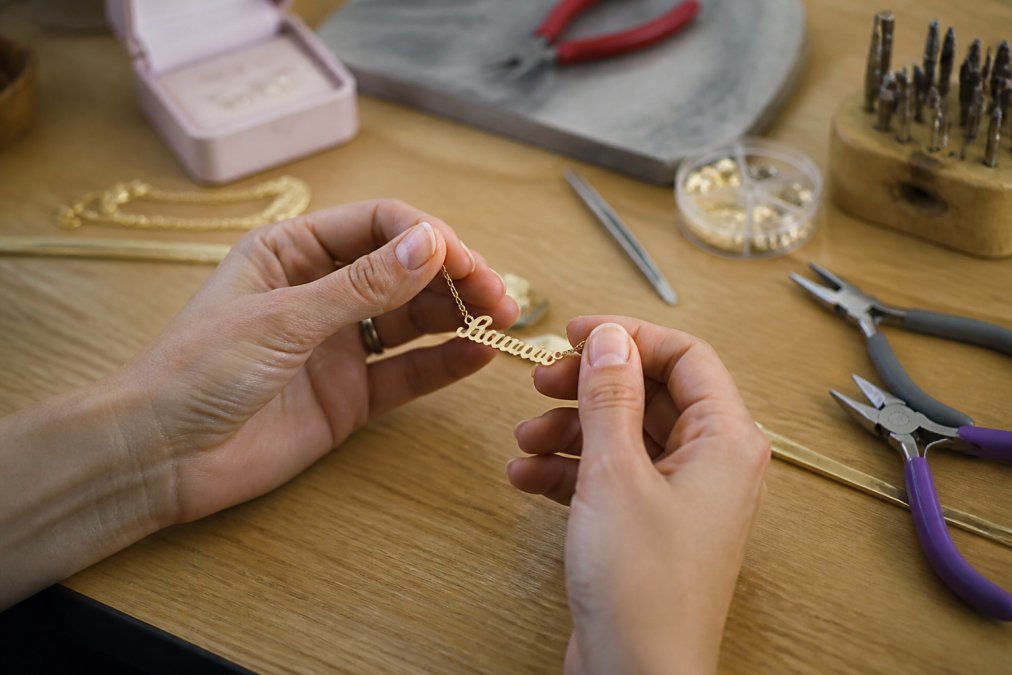
Chain gauge matters as much as the pendant. A flimsy cable chain stretches and snaps within months; a slightly heavier chain with a secure lobster clasp keeps its shape for years.
Red Flags to Watch for Before You Order
The clearest warning sign is a shop that cannot tell you where a piece is made or what it is made of. Vague claims like "premium materials" with no specification usually mean plated base metal.
Other signals to walk away from:
- Stock photos with no real customer images of finished pieces
- Prices far below what the raw materials alone would cost
Handmade vs Mass-Produced Jewelry Pros and Cons
Handmade jewelry wins on sentiment and finish quality; mass-produced wins on price and speed. Neither is universally better, and the right pick depends on the occasion.
Handcrafted pieces are made to order, so the engraving, font, and layout get individual attention.
Mass-produced necklaces are stamped from a mold and finished on an assembly line. They are affordable and consistent.
| Factor | Handmade | Mass-Produced |
|---|---|---|
| Cost | Higher, reflects labor | Lower, volume pricing |
| Materials | Often solid or precious metal | Frequently plated base metal |
| Personalization | Custom fonts, layout, engraving | Limited to preset options |
| Durability | Years to decades | Months to a few years |
| Lead time | Longer, made to order | Ships immediately |
How Much Should You Spend on Personalized Jewelry?
A reasonable range for a quality personalized necklace is roughly $50 to $80, which covers solid materials and real customization without paying for a luxury label (the FTC).
At BroSisCo, most name necklaces sit in that sweet spot. The Classic Style Name Necklace runs $55.65 in polished stainless steel or an 18K yellow gold finish, with up to 10 characters on an adjustable 16 to 18 inch cable chain. The Classic Vertical Name Necklace comes in at $76.54 for a stacked layout that reads well in photos.

Spending more only makes sense when you are buying solid gold or adding genuine stones. Free shipping kicks in over $70, so a single higher-end piece or two smaller ones both clear the threshold.
Material Longevity: How Long Do These Necklaces Actually Last?
Longevity is a materials question, not a brand question. Two necklaces that look identical on a product page can differ by a decade of wear depending on which gold construction sits under the finish. Here is the breakdown most guides skip.
Plated, Gold-Filled, Vermeil, and Solid Gold Compared
Electroplated base metal is the cheapest construction. A microscopic layer of gold or rhodium sits over brass or copper. With daily wear, that layer wears through at the high-contact points, the clasp, the chain links, and the back of the pendant, often within six to twelve months (jewelers.org). Once the plating is gone, the base metal tarnishes and can turn skin green.
Gold-filled jewelry bonds a thicker layer of gold (by U.S. convention, at least 5% of the item's total weight) to a base metal core using heat and pressure (the FTC). It is not plating in the thin-film sense, so it resists wear far longer, commonly several years of daily wear before any color shift. It is the practical middle ground for a piece worn often.
Vermeil is sterling silver with a gold layer of at least 2.5 microns. It looks and feels like fine jewelry and is a legitimate step up from plated brass, but the gold layer is still thin enough that heavy friction, rings, bracelets, constant necklace-on-necklace rubbing, can wear it down over time. Vermeil is best for pieces worn a few times a week, not 24/7.
Solid gold (10K, 14K, or 18K) is gold all the way through. It does not wear through because there is no layer to wear through. It can still scratch and, at 18K and above, is soft enough to dent. Solid gold is the only construction that genuinely lasts decades without refinishing.
Stainless steel is the outlier. It is not a precious metal, but it resists rust and tarnish on its own, which is why it handles showers, workouts, and daily wear without complaint. A PVD-coated stainless piece adds a hard, molecularly bonded color layer that outlasts standard electroplating.
| Construction | Typical daily-wear life | Best for |
|---|---|---|
| Electroplated base metal | 6-12 months | Occasional wear, low budget |
| Gold-filled | Several years | Everyday wear on a mid budget |
| Vermeil | A few years with care | Part-time wear, fine-jewelry look |
| Solid gold | Decades | Heirloom intent |
| Stainless steel / PVD | Years | Active lifestyles, showers, workouts |
Matching the Material to Your Lifestyle
The right question is not "which is best" but "which matches how I will actually wear this." If the necklace will go in the shower, the pool, and the gym, stainless steel is the honest answer.
Care That Actually Extends Life
- Wipe the pendant with a soft cloth after wearing to remove skin oils and perfume residue
- Store it in a dry pouch or box, away from humidity and direct sunlight
- Remove it before swimming or cleaning with chemicals
- Check the clasp and chain monthly for stretching or loosening
- Keep necklaces from rubbing against each other in storage to limit surface wear
The single biggest longevity mistake is wearing a personalized necklace into a chlorinated pool. Chlorine attacks plated finishes and dulls gold over time.
If a listing says only "gold" without specifying plated, filled, vermeil, or solid, assume it is plated. That single missing word is the difference between a piece that lasts a year and one that lasts a decade.
Resale Value and Long-Term Investment: What Handmade Necklaces Are Really Worth
Handmade personalized necklaces rarely hold financial resale value, but they hold sentimental value that outlasts most purchases. If you are buying as an investment, buy solid gold bullion, not a name necklace. That said, the secondary-market picture is more nuanced than most guides admit, and understanding it protects you from overpaying.
The Honest Resale Math
A custom name necklace is engraved with a specific person's name, which shrinks the buyer pool to near zero on the secondary market. A buyer named Sarah is not shopping for a pendant that says "Megan." That personalization, which is the whole point of the purchase, is also what destroys resale liquidity.
What does retain value is the raw material. If the piece is solid gold, the metal content has scrap value that tracks the spot price of gold, but you will typically receive a fraction of retail, since a refiner pays for metal weight, not the labor or design you paid for. Gold-filled and vermeil pieces have negligible scrap value because the gold layer is too thin to recover economically. Plated and stainless pieces have essentially no resale value at all.
A common pattern in the resale market: a buyer pays retail for a personalized piece, tries to sell it a year later, and discovers the only realistic buyers are people shopping for the same name or for scrap. Neither pays close to what was spent.
What Actually Retains Value
- Solid precious metal content, the only component with a measurable floor
- Recognizable maker marks or hallmarks, helps a buyer verify metal purity
- Timeless, simple designs, a clean cursive name or a plain bar ages better than a trend-driven shape
- Original packaging and documentation, modestly improves resale for any jewelry, personalized or not
What does not retain value: engraving, custom fonts, gemstone accents sold at a markup, and the labor premium you paid a small maker. None of it transfers to a second buyer.
Red Flags That Signal a Bad Buy
Because personalized pieces are often final sale, the red flags matter more here than in almost any other jewelry category.
- No stated metal or finish. "Premium materials" with no specification usually means plated base metal.
- **** Without one, engraving can come back cramped or clipped.
- **** You are stuck with any mistake.
- Stock photos only. No real customer images of finished pieces means you cannot judge actual quality.
- Prices far below raw-material cost. If a "solid gold" piece costs less than the gold in it, it is not solid gold.
- No written confirmation of metal and finish before ordering. Get it in writing.
If a seller will not confirm the metal and finish in writing before you order, do not buy. Personalized pieces are final sale at many shops, so a wrong material choice becomes an expensive lesson with no refund path.
The Return That Actually Matters
The real "return" on a handmade personalized necklace is emotional, not financial. An heirloom-quality piece passed to a daughter or granddaughter carries meaning no appraisal can capture. For that goal, focus on durability and timeless design rather than chasing resale. A simple cursive name in solid steel or solid gold will look as good in twenty years as it does today. A Classic Heart Style Name Necklace at $55.65, or a Signature Style Name Necklace at the same price, both favor clean lines that age well.

If you want a piece with genuine staying power, the Classic Paw Print Name Necklace at $55.65 suits pet lovers, while the vertical and heart designs cover most other gifting moments. Each ships from the USA and arrives in a soft touch box.
Buy a handmade personalized necklace for the meaning and the wear, not the resale. If resale matters to you, buy solid gold and keep the hallmark and packaging, but expect to recover only metal value, never the personalization premium.
Frequently Asked Questions
How much does it cost to have a custom necklace made?
Custom necklace pricing depends on the material, finish, and complexity of the design. At BroSisCo, personalized name necklaces start at $55.65 for styles like the Classic Style Name Necklace and Signature Style Name Necklace, while the Classic Vertical Name Necklace runs $76.54. These prices include up to 10 characters of personalization and an adjustable 16 to 18 inch cable chain. Most buyers spend between $50 and $80 for a single high-quality piece.
What are the benefits of choosing handmade jewelry over mass-produced?
Handmade jewelry typically offers better attention to detail and the ability to customize fonts, symbols, and finishes. Mass-produced pieces are cheaper. Handcrafted necklaces from USA-based makers use materials like polished stainless steel or 18K yellow gold finish, which resist tarnishing and hold their appearance far longer. The trade-off is a higher upfront cost and longer turnaround time.
How do you determine the quality of a personalized necklace?
Check three things: the base metal (stainless steel lasts longest), the clasp, and the finish (PVD-coated or 18K gold finish resists fading). Also look at the chain, an adjustable 16 to 18 inch cable chain. If a seller cannot tell you the material or the country of assembly, that is a red flag. Ask before you buy.
Are name necklaces still in style in 2026?
Yes. Name necklaces have stayed popular because they are personal, wearable, and work with almost any outfit. In 2026 the trend leans toward smaller, more refined pendants with cursive or vertical lettering rather than the oversized styles of past years. Custom design options like heart symbols, paw prints, and vertical layouts keep the category fresh. A well-made personalized necklace reads as a keepsake, not a trend piece.
Choosing a personalized necklace means balancing sentiment against durability, and the wrong material choice is the one mistake that ruins both. BroSisCo makes the decision easier with pieces designed, assembled, and shipped from the USA, free shipping over $70, and a 100% customer satisfaction guarantee. Explore the name necklace collection and pick a keepsake built to last. Get started with BroSisCo and give a gift that stays close to the heart.


