


 support@brosisco.store
Table of Contents
- Why Luxury Jewelry Prices Are Inflated
- Solid Gold vs. Gold Vermeil vs. Plated: What Lasts
- How to Spot Quality Jewelry Without a Loupe
- Ethical Fine Jewelry Brands and What to Look For
- Cost-Per-Wear: The Math Luxury Brands Hope You Skip
- Best Places to Buy Personalized Jewelry in 2026
- Luxury Jewelry Alternatives That Hold Up Over Time
- Frequently Asked Questions
Last Updated: September 16, 2026
Why Luxury Jewelry Prices Are Inflated
The markup on designer jewelry is the industry's quietest secret. A significant share of what you pay at a luxury counter covers the brand name, the boutique lease, and the advertising budget, not the metal or stones themselves. That gap is exactly why so many shoppers now hunt for alternatives to expensive luxury jewelry brands.
Luxury markup is the difference between a piece's production cost and its retail price, and at the top of the market it can be steep. Many jewelers operate on a "keystone-plus" model, where wholesale cost is multiplied several times over before a piece reaches the display case. You are not only buying gold and gemstones. You are funding the flagship store on a prime avenue, the celebrity campaign, and the packaging that weighs more than the pendant.
Here is what most buyers never see broken out:
- Brand premium: The logo stamped on the clasp carries its own price tag.
- Retail overhead: Rent, staff, insurance, and security in high-traffic locations.
- Marketing spend: Print, influencer, and event budgets folded into every piece.
- Wholesale-to-retail multiplier: Often the single largest line item.
None of this means luxury jewelry is bad. It means the price reflects more than materials. Once you understand that, the search for value becomes a math problem rather than a status decision.
Solid Gold vs. Gold Vermeil vs. Plated: What Lasts
Solid gold is the same precious metal all the way through, while gold vermeil is a thick layer of gold bonded over sterling silver, and gold plated jewelry carries only a thin gold coating over a base metal. The difference decides how long a piece survives daily wear.
This is where the durability conversation gets real. Karat weight tells you the purity of gold in an alloy: 14k and 18k are the common benchmarks, and higher karat means more gold and a softer metal. Plating thickness is measured in microns, and it is the number that separates a piece that lasts years from one that fades in months.
| Type | What It Is | Durability | Best For |
|---|---|---|---|
| Solid gold | Precious metal throughout | Highest | Heirloom pieces, daily wear |
| Gold vermeil | Thick gold over sterling silver | High | Sensitive skin, frequent wear |
| Gold plated | Thin gold over base metal | Lower | Occasional, trend-driven wear |
| Stainless steel with finish | Steel base, gold or polished finish | High | Everyday, active lifestyles |
For anyone with a nickel allergy, nickel-free construction matters more than karat. A polished stainless steel base with a gold finish, like the pieces in the BroSisCo collection, sidesteps the reaction that plated costume jewelry often triggers.
How to Spot Quality Jewelry Without a Loupe
You can judge most jewelry quality with your eyes and hands, no magnification required. Look for smooth solder joints, a secure clasp, and a finish that reflects light evenly rather than in patchy streaks.
Hallmarking is your first check. In the United States, precious metal items are commonly stamped with a quality mark, such as "14K" or "925," indicating the metal's purity. A missing stamp on a piece sold as solid gold is a red flag.
Then run through this quick inspection:
- Weight: A solid piece feels denser than a hollow one of the same size.
- Clasp: A lobster or parrot clasp should snap firmly and sit flush.
- Edges: Rough or sharp edges signal rushed finishing.
- Stone setting: Prongs should grip evenly, with no wiggling stones.
- Color consistency: Uniform tone across the piece points to better plating.
A common mistake is assuming a heavy price tag guarantees craftsmanship. It does not. The Federal Trade Commission's jewelry guides outline how precious metal and gemstone claims must be described, which is useful when a seller's language gets vague.
Interlocking Hearts Necklace →
Ethical Fine Jewelry Brands and What to Look For
Ethical sourcing means a brand can trace where its metals and stones come from and can show that workers and communities were treated fairly along the way. For shoppers comparing ethical fine jewelry brands, transparency is the whole test, but "transparency" only means something when you know which documents and certifications to ask for.
Start with the metals. Recycled gold and silver are increasingly common, and the Federal Trade Commission's environmental marketing guides set the bar for when a brand can legally call a claim "recycled" without overstating it.
- Kimberley Process certificate, required for rough diamond imports and exports; the Kimberley Process overview from the U.S. State Department explains the framework meant to keep conflict diamonds out of legitimate trade.
- Supplier or refiner name, a real brand can name the refiner or cutter, not just say "responsibly sourced."
- Lab-grown disclosure, the FTC requires lab-grown diamonds to be clearly identified as such, so a vague "created diamond" label is a warning sign.
- Fair trade or Fairmined certification, third-party marks that audit mining conditions and community payments, not self-issued badges.
Cost-Per-Wear: The Math Luxury Brands Hope You Skip
Cost-per-wear is the purchase price divided by the number of times you actually wear a piece. It is the single most useful calculation in jewelry buying, and it reframes the entire value question.
- A piece worn 150 times a year for five years gives you 750 wears.
- Divide the price by those wears to get your true cost.
- A lower-priced piece you rarely wear can end up costing more per wear than a higher-priced staple.
Best Places to Buy Personalized Jewelry in 2026
The best places to buy personalized jewelry in 2026 are sellers who combine transparent materials, verifiable craftsmanship, and a clear personalization process. Personalization has moved from engraving kiosks to made-to-order pieces that ship from the maker.
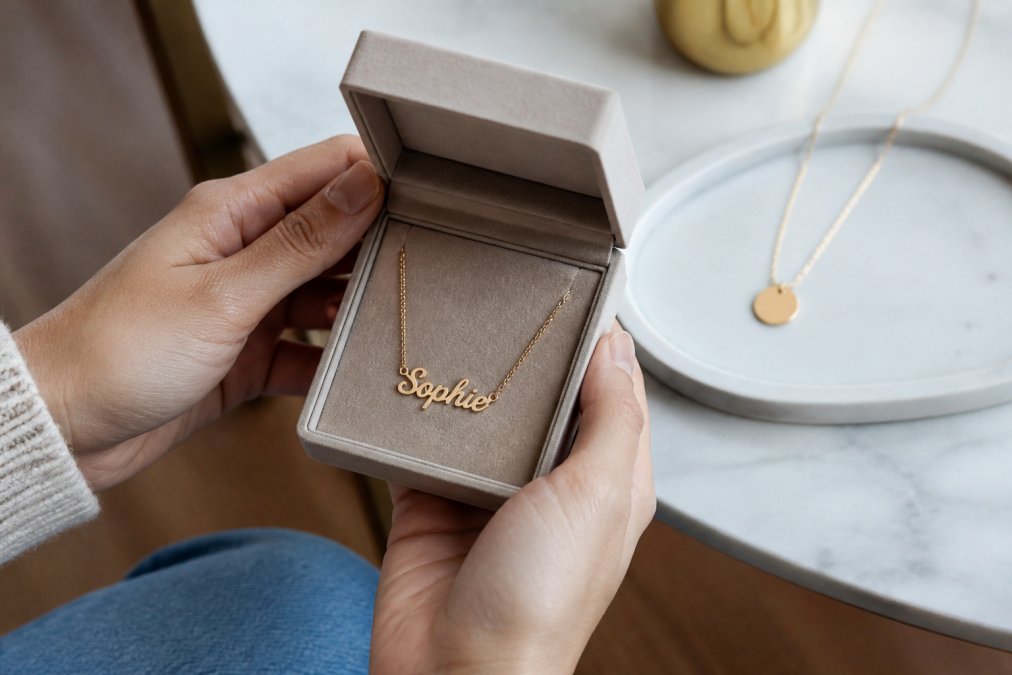
Here is how the BroSisCo options compare:
| Piece | Price | Personalization | Finish Options |
|---|---|---|---|
| Classic Style Name Necklace | $55.65 | Up to 10 characters | Stainless steel or 18K yellow gold finish |
| Classic Heart Style Name Necklace | $55.65 | Up to 10 characters | Stainless steel or 18K yellow gold finish |
| Classic Vertical Name Necklace | $76.54 | Up to 10 characters | Stainless steel or 18K yellow gold finish |
| Interlocking Hearts Necklace | $83.51 | Fixed design | Surgical steel with rose gold or 18k yellow gold finish |
| Forever Love Necklace | $111.37 | Fixed design | 14k white gold or 18k yellow gold finish |
Luxury Jewelry Alternatives That Hold Up Over Time
- Can this piece be resized or re-plated?
- Are replacement clasps or jump rings available?
- Will the seller service it, or will I need a local bench jeweler?
The Federal Trade Commission's jewelry guides outline how precious metal and gemstone claims must be described, which is useful when a seller's language gets vague. The bottom line: durability is a design decision, repairability is a service decision, and appraisal is a verification decision. Get all three right and an affordable piece can outlast a luxury one.
Frequently Asked Questions
What are the best affordable luxury jewelry alternatives?
Look for pieces made with solid gold, gold vermeil, or stainless steel with thick gold finishes rather than thin plating. Direct-to-consumer brands and independent makers often sell the same materials as luxury houses at 40-60% less because they skip wholesale markups. Personalized necklaces from small US-based shops frequently use 14k or 18k gold finishes over stainless steel, giving you the look and durability of fine jewelry without the four-figure price tag.
Is gold-plated or vermeil jewelry a good alternative to solid gold?
Gold vermeil uses a sterling silver base with at least 2.5 microns of gold plating, making it far more durable than standard gold-plated pieces. Solid gold lasts indefinitely, but vermeil can hold up for years with proper care. If you want the gold look without the cost, vermeil is the stronger choice. Check the plating thickness before buying, since anything under 1 micron will wear through quickly on rings and bracelets.
How can I find high-quality jewelry without the luxury markup?
Focus on materials and construction rather than brand names. Look for hallmarks or stamps like 14K, 18K, or 925, check that clasps are sturdy lobster or parrot styles, and examine whether stones are set securely with even prongs. Independent jewelers and direct-to-consumer brands often provide detailed specs, which luxury houses sometimes hide behind marketing. Reading reviews about tarnish resistance and long-term wear gives you a clearer picture than any logo.
What should I look for when buying non-branded fine jewelry?
Check the metal content, stone clarity, and clasp quality first. Solid gold or sterling silver pieces should carry a stamp indicating purity. For gemstones, ask whether they are lab-grown or mined and request clarity details. A bench jeweler can verify materials for a small fee, which is worth doing on any piece over $200. Also confirm the return policy and whether the seller offers repairs, since repairability extends a piece's life significantly.
Are independent jewelry brands better quality than luxury houses?
Not automatically, but independent makers often provide more transparency about sourcing and materials. Many luxury houses charge for brand heritage rather than superior craftsmanship. Independent jewelers who specialize in bespoke or custom engagement rings frequently use the same precious metals and stones. The key difference is that you can often speak directly with the maker, ask about ethical sourcing, and get a piece tailored to your budget rather than paying for a name.


