


 support@brosisco.store
Table of Contents
- Step 1: Build a Recipient Profile Before You Shop
- Step 2: Use Personalization to Create Emotional Connection
- Personalized Gifts for Family: Matching the Gift to the Person
- How to Choose a Gift for Someone Who Has Everything
- A Meaningful Gift Giving Guide for Every Budget
- Cultural and Generational Nuances in Family Gift-Giving
- Sustainable and Zero-Waste Gifting: Keepsakes Over Clutter
- Post-Gift Follow-Up: The Step Most People Skip
- Frequently Asked Questions
Last Updated: September 22, 2026
Step 1: Build a Recipient Profile Before You Shop
The most reliable way to choose meaningful gifts for family is to stop shopping and start listening. A recipient profile is a simple written record of what someone loves, needs, and talks about. People who plan ahead give better gifts.
What to Track: Hobbies, Lifestyle, and Daily Routines
Start a note on your phone for each person and add to it all year.
- Hobbies: What do they do on a free Saturday?
- Lifestyle: Do they host dinners, travel often, or work from home?
- Daily routines: What do they touch or use every single day?
- Recent mentions: What have they said they wanted but never bought?
- Sizes and preferences: Ring size, favorite metal, colors they wear
The Gift-Giving Anxiety Framework: Name the Worry First
Naming your worry makes it easier to solve.
Ask yourself which fear is driving you:
- The "not enough" worry: Will this seem cheap or small?
- The "wrong taste" worry: Will they actually use it?
- The "already has it" worry: Do they need anything at all?
- The "no time" worry: Can I find something good before the date?
Each worry has a different fix: "not enough" usually means you are shopping for your ego, not the recipient, while "wrong taste" means you need more profile detail.
Step 2: Use Personalization to Create Emotional Connection
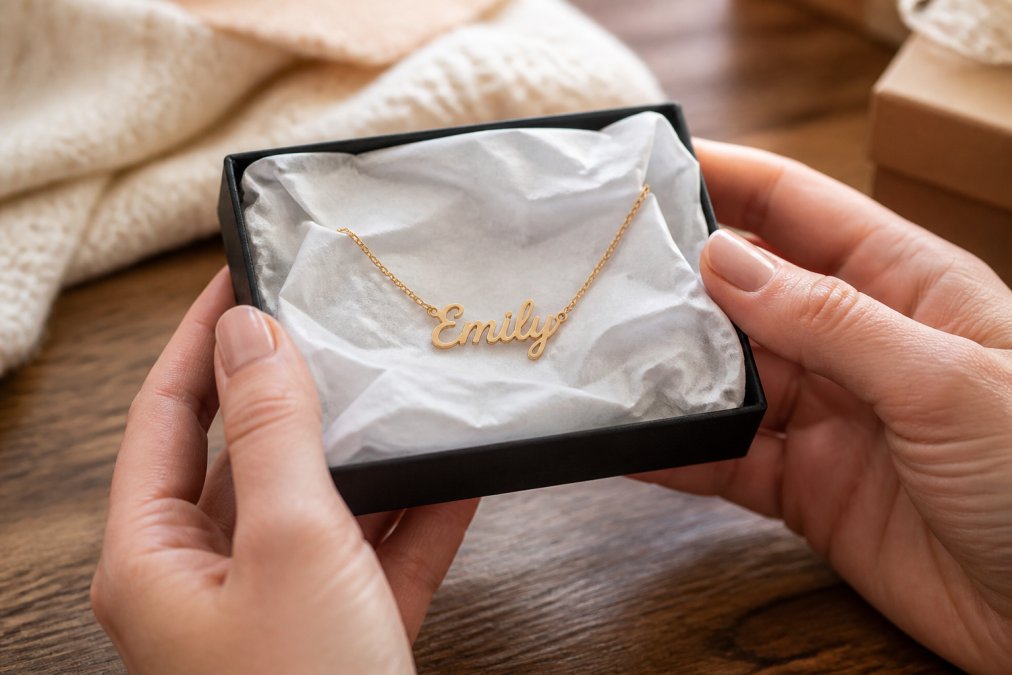
Personalization turns a nice object into a keepsake. A name, a date, or a private joke tells the recipient you thought about them specifically, the emotional connection most store-bought items never reach.
Monogrammed, Engraved, and Custom-Made Options That Work
Not every personalized gift lands well. These formats tend to work best:
- Name jewelry: A necklace with a first name or a child's name
- Engraved keepsakes: A date, a short phrase, or coordinates
- Monogrammed home goods: Blankets, frames, or kitchen items
- Custom-made pieces: Items built to order in a chosen metal or finish
Personalized Gifts for Family: Matching the Gift to the Person
Match the personalized gift format to the relationship, not your own taste.
| Recipient | Best Format | Why It Works |
|---|---|---|
| Spouse or partner | Name necklace, engraved keepsake | Marks a shared milestone |
| Parent or grandparent | Custom jewelry, monogrammed home goods | Ties to family history |
| Sibling | Custom-made item with a shared joke | Signals closeness |
| Teen or young adult | Simple name jewelry | Feels current, not fussy |
How to Choose a Gift for Someone Who Has Everything
The answer is not to buy them more stuff. People who "have everything" usually want one of three things: an experience, a consumable, or something personal they would never buy themselves. The usual gift signals, surprise, novelty, price, are exactly what this person has learned to ignore.

The Subtraction Method: Remove What They Already Own
Before you shop, run a subtraction pass. Ask three questions:
- What do they already have a good version of? If the answer is "a great chef's knife," do not buy a knife. Buy the thing that supports the knife, a sharpening service, a cutting board in a wood they have mentioned, a knife roll for the class they keep talking about.
- What do they keep borrowing? Borrowed items are unmet needs in disguise. If your brother always grabs your father's flashlight, he wants his own, better one.
- What do they complain about but never fix? A wobbly chair, a cold office, a phone case that has cracked twice. These are the highest-conversion gifts because the recipient has already done the mental work of wanting a solution.
The Consumable Rule: Give Something That Disappears
Consumables solve the clutter problem and let you spend more per unit without creating storage burden. Strong options:
- Small-batch coffee or tea in a roast or blend they cannot buy locally
- A restaurant gift card to a place they already love, not a new place they have to research
- A high-end version of a pantry staple they use weekly, like olive oil or vanilla
- A candle in a scent tied to a memory, not a generic seasonal scent
- A subscription to a service they already pay for, prepaid for a year
The Experience Upgrade: Make the Memory the Gift
Experiences fail when vague ("a nice dinner") and succeed when specific and pre-planned. Instead of a gift card, book the thing: pick the date, confirm the time, and put it on their calendar with a printed card.
- Shared activities: A cooking class, a concert, a weekend hike with a planned stop
- Skill-based experiences: A pottery workshop, a photography walk, a wine tasting
- Service experiences: A house cleaning, a meal delivery week, a car detail
The Charity and Tribute Route
A donation in their name works only when the cause is specific to them. A generic donation to a large charity reads as a cop-out; a gift to the local animal shelter where they adopted their dog, or a scholarship fund at their alma mater, reads as attention.
What Not to Do
The mistake is chasing novelty. A person with everything does not need a gadget, a trend item, or a "surprise" they did not ask for. Surprise is a gift for the giver. Attention is a gift for the recipient. When in doubt, choose the smaller, more specific gift over the larger, more generic one.
A Meaningful Gift Giving Guide for Every Budget
A meaningful gift giving guide starts with one rule: budget sets the format, not the feeling. A small, well-chosen gift often lands better than an expensive one that misses.
| Budget | What to Consider | Example |
|---|---|---|
| Under $25 | Consumables, small keepsakes | Favorite treat, framed photo |
| $25 to $60 | Personalized jewelry, home goods | Name necklace, monogrammed item |
| $60 to $100 | Custom-made pieces, gift sets | Vertical name necklace plus wrap |
| $100 and up | Experiences, larger keepsakes | Shared trip, premium custom item |
Frugal Gifting Ideas That Still Feel Sentimental
Frugal gifting works when the effort is visible. A handwritten letter paired with a small custom item costs little and means a lot.

- A photo book of a shared year
- A playlist with a printed note explaining each song
- A recipe card in your own handwriting
- A small engraved item with a meaningful date
- A day spent together, planned in advance
Cultural and Generational Nuances in Family Gift-Giving
Most gift guides treat the family as a single audience. It is not. A household with a grandparent, two parents, and a teenager contains at least three gift cultures, and the same present can land as thoughtful with one person and tone-deaf with another.
The Generational Split: What Each Group Tends to Value
These are patterns, not rules, but they are consistent enough to plan around:
- Older relatives (often Silent Generation and Boomers): Tend to value physical items they can hold, display, or use. Wrapping and presentation matter. A handwritten card often outweighs the gift itself. They may read a digital gift card as impersonal.
- Gen X: Often the most practical group. They tend to appreciate gifts that solve a problem or upgrade something they already own. They are also frequently the ones managing the family's gift logistics, so a gift that reduces their workload lands well.
- Millennials: Split between wanting experiences and wanting fewer, better objects. They tend to respond to sustainability, craftsmanship, and gifts tied to a shared memory.
- Gen Z and younger teens: Often value experiences, digital items, and gifts that signal they are seen as an individual rather than a category. Cash and gift cards are frequently welcome, not insulting.
When Generations Disagree Inside the Same Family
The harder problem is choosing when the family itself has conflicting norms. Common conflicts:
- Group opening vs. private exchange. Some families open gifts together in a loud room; others prefer quiet, one-on-one giving. If you are new to the family, ask a partner or sibling which one it is before the event.
- Handmade vs. store-bought. One side of the family may read a handmade gift as effort; another may read it as cheap. Neither is wrong, but you need to know which room you are in.
- Cash vs. objects. Giving cash can be generous or awkward depending on the family. If you are unsure, a gift card to a specific store they already shop at is a safer middle ground than an envelope of cash.
- Religious or cultural meaning. Some occasions carry specific expectations, a baptism, a bar or bat mitzvah, a quinceañera, a Lunar New Year red envelope. If you are not sure of the custom, ask a family member directly rather than guessing.
A Short Script for Asking Without Spoiling the Gift
You can gather this information without ruining the surprise:
- "I want to get something you'll actually use, do you prefer experiences or things these days?"
- "Is there a tradition in your family around how gifts are opened?"
- "Would you rather I pick something personal or give you something practical?"
These questions do not reveal the gift. They reveal the format, which is the part people actually care about.
The Cross-Generational Gift That Usually Works
When you need one gift that bridges generations, a family exchange, a group gift, a holiday where everyone is in the room, the safest format is a shared experience or a consumable tied to a family tradition. A meal, a photo book of the year, or a holiday food everyone associates with the occasion lands across age groups because it does not require the recipient to adopt a new taste or identity.
Sustainable and Zero-Waste Gifting: Keepsakes Over Clutter
More families are moving away from disposable gifts. The goal is a keepsake, not clutter. A durable item that lasts years beats a novelty gift that ends up in a drawer.
Practical ways to gift with less waste:
- Choose items made to last, not to trend
- Skip plastic wrap and use reusable gift bags or fabric
- Pick experiences over packaging
- Support makers who build items to order
- Add a Gift Wrap with Personalized Message so the presentation feels intentional
Post-Gift Follow-Up: The Step Most People Skip
A short follow-up weeks later turns a present into a memory.

Try this:
- Send a message two weeks after giving the gift
- Ask how they are using it, not whether they liked it
- Note any detail they mention for next year's profile
- Take a photo if they are wearing or using the item
- Add the reaction to your running note
Frequently Asked Questions
What makes a gift truly meaningful?
A meaningful gift connects to the recipient's interests, lifestyle, or shared history. It shows you paid attention. Personalized items like a custom name necklace or a monogrammed keepsake carry emotional weight because they cannot be bought off a shelf. Thoughtfulness matters more than price. A $20 gift that references an inside joke often lands better than a $200 generic item.
How do you make a gift feel more personal?
Start with the recipient profile: their hobbies, daily routines, and what they talk about most. Then add a personalization layer. Engrave a date, use their nickname, or choose a custom-made piece that reflects their style. Pair it with a handwritten note explaining why you chose it. The explanation often matters as much as the gift itself.
What is a good gift for a family that has everything?
Focus on consumable or experience-based gifts: a shared activity, a curated digital gift, or a sentimental keepsake. For someone who has everything, the value shifts from practicality to emotional connection. A personalized item, like a custom necklace or engraved home good, works because it is unique to them and cannot be duplicated.
How far in advance should I order personalized gifts for family?
Order at least two to three weeks before the occasion. Custom-made items require production time before shipping. If you are ordering from a USA-based maker, turnaround is typically faster than overseas options, but popular occasions like Mother's Day and winter holidays create backlogs. Check the stated production window before checkout and add a buffer.
Finding a gift that truly fits a family member takes more thought than most people expect. BroSisCo makes that easier with personalized jewelry, cozy home goods, and unique keepsakes, most of them designed, assembled, and shipped from the USA. Every order comes with a 100% customer satisfaction guarantee, and shipping is free on orders over $70. Get started with BroSisCo and give a gift your family will keep close for years.


