


 support@brosisco.store
Table of Contents
- The Short Answer: When Personalized Jewelry Holds Up to Daily Wear
- Best Metals for Everyday Jewelry: What Actually Survives Daily Wear
- Is Gold Vermeil Good for Daily Wear? What You Need to Know
- Personalized Jewelry Care Tips: How to Keep Your Piece Looking New
- Repairability and Skin Sensitivity: Two Things Most Guides Skip
- Budget-Conscious Durability: What You Get at Different Price Points
- Verdict: Is Personalized Jewelry Good for Daily Wear?
- Frequently Asked Questions
Last Updated: September 23, 2026
The Short Answer: When Personalized Jewelry Holds Up to Daily Wear
Yes, personalized jewelry can hold up to daily wear, but it depends on the metal and care. A custom name necklace in polished stainless steel survives years of showers, workouts, and sleeping; the same design in a softer, plated metal may lose its finish within months.

Best Metals for Everyday Jewelry: What Actually Survives Daily Wear
The best metals for everyday jewelry resist corrosion, hold their finish, and tolerate constant contact with skin, water, and friction. Stainless steel, solid gold, and gold-filled lead that list; sterling silver and plated options demand more attention.
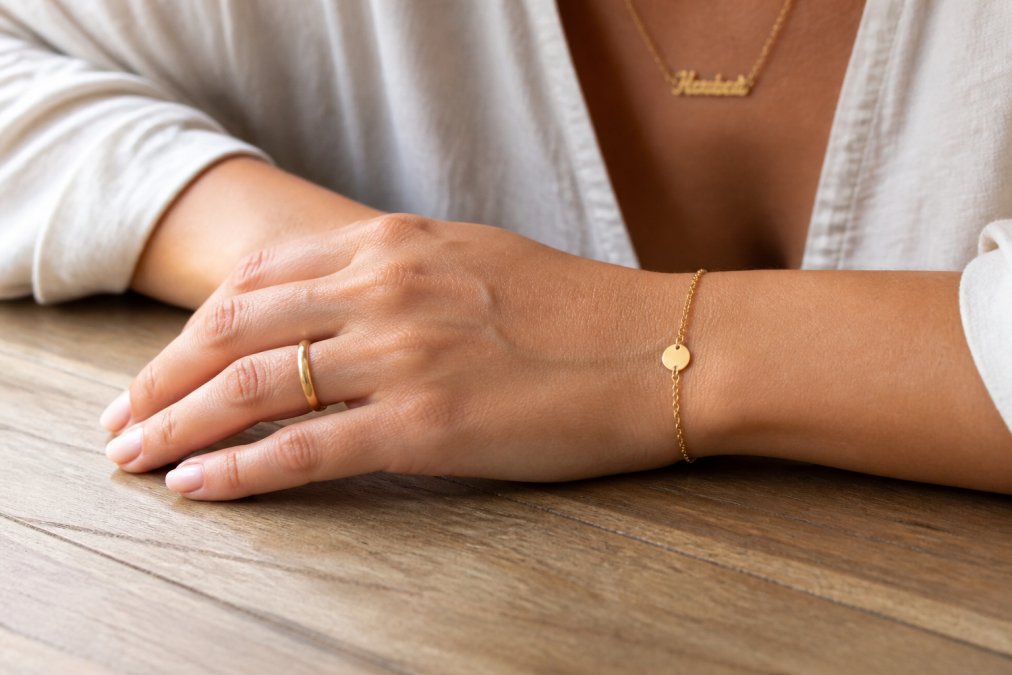
Here's how the main options compare for daily wear:
| Metal | Daily Wear Durability | Tarnish Risk | Water/Sweat Resistance | Repairability | Best For |
|---|---|---|---|---|---|
| Stainless steel | High | Very low | Excellent | Moderate (limited resizing) | Showers, workouts, active wear |
| Solid gold (14k/18k) | Very high | None | Excellent | Excellent | Heirloom pieces, lifelong wear |
| Gold-filled | High | Low | Good | Moderate | Affordable gold look, daily use |
| Sterling silver | Moderate | High | Poor | Good | Occasional wear, styling |
| Gold vermeil | Low to moderate | Moderate | Poor | Poor | Special occasions |
Stainless Steel: The Workhorse for Daily Wear
Stainless steel is the most practical choice for someone who never removes their jewelry. It resists tarnish, corrosion, and water damage, handling hand-washing, swimming, and gym sessions without issue. Chromium forms a thin, self-healing oxide layer that regenerates in oxygen, which is why a stainless steel name necklace survives years of showers and sweat without pitting.
Solid Gold and Gold-Filled: Investment Pieces That Last
Solid 14k or 18k gold is the gold standard for heirloom quality: it won't tarnish, corrode, or fade, and can be repaired and resized for decades. Gold-filled jewelry offers a similar look at lower cost by bonding a thick gold layer to brass or copper using heat and pressure. By FTC standards the gold must be at least 5% of total metal weight, which is why gold-filled wears far better than plating.
Sterling Silver: Beautiful but Needs Attention
Sterling silver tarnishes when exposed to air, moisture, and skin oils. Daily wear accelerates dulling: sulfur in air and sweat reacts with the copper alloyed into sterling silver (92.5% silver, 7.5% copper) to form silver sulfide, the black film on tarnished pieces. If you choose silver, plan on regular polishing and store it in an airtight pouch between wears.
Skin Chemistry: Why the Same Metal Behaves Differently on Different People
One factor almost no buying guide addresses: your skin chemistry changes how a metal wears. Everyone's sweat has a different pH and different concentrations of salts and acids, so people with more acidic sweat often find plated and vermeil pieces discolor faster than on friends wearing the same piece.
Budget-Conscious Durability: Which Metals Are Worth It for 24/7 Wear
Not every "personalized" metal is worth the money for daily wear:
- Under $60: Polished stainless steel name necklaces offer the best durability per dollar. This is the sweet spot for a piece you'll never take off.
- $60 to $150: Gold-filled and heavier stainless designs add a warmer finish without the fragility of plating.
- $150 and up: Solid gold and 14-karat pieces deliver heirloom quality and full repairability.
Is Gold Vermeil Good for Daily Wear? What You Need to Know
Gold vermeil is not ideal for daily wear. Vermeil is sterling silver coated with a thin gold layer that wears away with friction, moisture, and repeated contact. It looks stunning for occasional wear, but constant use exposes the silver underneath.
Personalized Jewelry Care Tips: How to Keep Your Piece Looking New
Personalized jewelry care tips start with one rule: remove your piece before harsh exposure, showers, swimming, chemical cleaning, and heavy exercise. That habit extends the life of any metal, especially plated and silver options.
Daily Habits That Protect Your Jewelry
- Put jewelry on last, after lotions and perfume have dried
- Remove rings and necklaces before bed to prevent chain stress and tangling
- Wipe pieces with a soft cloth after wearing to remove oils and sweat
- Avoid chlorine, saltwater, and household cleaners, which corrode finishes
Cleaning and Storage for Long-Term Shine
Clean stainless steel and gold with warm water and a drop of mild dish soap, then dry with a soft cloth. Use a silver polishing cloth for sterling silver. Store each piece separately in a soft pouch or lined box to prevent scratches. For engraved pieces, avoid abrasive polishes that dull the lettering.
Repairability and Skin Sensitivity: Two Things Most Guides Skip
Two factors rarely mentioned in buying guides matter enormously over time: whether a personalized piece can be repaired, and whether your skin reacts to the metal.
Repairability: What Can Be Fixed, and What Can't
Personalized pieces fail in predictable places: clasps, jump rings, chains, and the solder joints where a nameplate attaches. Most are repairable, but the metal determines how easily and how expensively.
- Stainless steel and solid gold are the most serviceable. Chains, clasps, and jump rings can be replaced by most jewelers. Solid gold can also be resized, re-soldered, and re-polished indefinitely.
- Gold-filled is moderately repairable. A jeweler can replace a clasp or re-solder a jump ring, but once the gold wears through to the base metal, that spot stays exposed.
- Gold vermeil and thin plating are the least repairable. The coating cannot be easily reapplied at a local jeweler, and re-plating usually costs more than the piece is worth.
- Engraved surfaces are permanent. Engraving removes metal, so it can't be un-engraved. If a name or date is engraved and you later want it changed, the piece usually has to be replaced, not repaired.
Skin Sensitivity: Why Some Metals React and Others Don't
Nickel is the most common trigger for skin reactions, and it hides in cheap costume jewelry and some gold alloys. The reaction is a contact allergy: nickel ions leach out when they meet sweat, and the immune system responds with redness, itching, and sometimes a rash. Once developed, it tends to be lifelong.
- Stainless steel, surgical-grade 316L stainless steel is widely used in body jewelry and is a strong choice for sensitive skin.
- Sterling silver, generally well tolerated, though the copper content can bother a small number of people.
- Solid gold, 14k and 18k gold are alloyed with other metals, so a nickel-sensitive person should confirm the alloy. 18k gold contains more pure gold and less alloy, which usually means fewer reactions.
- Gold-filled and vermeil, the base metal is often brass or copper, which can trigger reactions if the gold layer wears through.
The Long-Term View
Repairability and skin sensitivity aren't glamorous, but they're the difference between a piece you wear for a season and one you wear for a decade. A stainless steel or solid gold piece that suits your skin chemistry is the safest bet for daily wear; a plated piece that irritates your skin or can't be repaired is a short-term purchase.
Budget-Conscious Durability: What You Get at Different Price Points
Spending more doesn't always mean better daily-wear performance, but it usually buys longer life and easier repairs.
- Under $60: Polished stainless steel name necklaces offer the best durability per dollar. They resist tarnish and handle daily wear well.
- $60 to $150: Gold-filled and heavier stainless designs add a warmer finish without the fragility of plating.
- $150 and up: Solid gold and 14-karat pieces deliver heirloom quality and full repairability.
Verdict: Is Personalized Jewelry Good for Daily Wear?
Is personalized jewelry good for daily wear? Yes, when the metal suits your routine. Stainless steel and gold-filled pieces handle constant use with minimal care. Solid gold lasts a lifetime. Vermeil and thin plating are better saved for occasions.
Frequently Asked Questions
What type of personalized jewelry is best for everyday wear?
Stainless steel and solid gold are the most durable choices for daily wear. Stainless steel resists tarnishing and corrosion, making it ideal for everyday use. Solid gold, while more expensive, holds up for decades. If you want a gold look without the cost, 18K gold finish over stainless steel offers a good balance. Avoid plated pieces with thin coatings if you plan to wear them daily, as the finish can wear off over time.
How do you keep personalized jewelry from tarnishing?
Keep personalized jewelry away from moisture, perfume, and lotions. Put jewelry on last after applying products, and take it off before showering or swimming. Store each piece in a soft pouch or the box it came in to limit air exposure. For stainless steel and gold-finished pieces, a quick wipe with a soft cloth after wearing removes oils and slows tarnish. Sterling silver needs more attention and benefits from a polishing cloth every few weeks.
Is gold vermeil good for daily wear?
Gold vermeil has a thicker gold layer than standard plating, so it lasts longer, but it is not as durable as solid gold or stainless steel. With careful handling, it can handle daily wear for a year or more before the gold layer shows signs of thinning. If you wear it every day and expose it to water or sweat, expect faster wear. For a piece you never want to take off, stainless steel or solid gold is a safer bet.
Can you shower with personalized gold-plated jewelry?
It is best to remove gold-plated jewelry before showering. Water, soap, and shampoo can break down the thin gold layer over time, causing it to fade or flake. Even gold vermeil, which has a thicker coating, will last longer if you keep it dry. If you want a piece you can wear in the shower without worry, choose stainless steel or solid gold. Both handle moisture far better than plated options.
How do I choose personalized pieces that won't break with daily wear?
Look for solid construction, secure clasps, and materials like stainless steel or solid gold. Check the chain and clasp quality, since these are often the first parts to fail. A 9mm lobster clasp, like the ones on BroSisCo's name necklaces, is a sturdy choice. Also consider the weight of the pendant: heavier pieces put more stress on the chain. Reading care instructions and choosing tarnish-resistant metals will help your piece last.


