


 support@brosisco.store
Table of Contents
- What You'll Need to Verify USA Made Jewelry
- Step 1: Examine Hallmarks and Maker's Marks on the Piece
- Step 2: Understand FTC Made in USA Standard Requirements
- Step 3: Verify Material Purity and Grade
- Step 4: Request and Review a Jewelry Certificate of Authenticity Template
- Step 5: Research Manufacturing Transparency and Supply Chain
- Step 6: Consult an Expert Appraiser if Needed
- Common Mistakes to Avoid When Verifying Jewelry Origin
Last Updated: August 11, 2026
What You'll Need to Verify USA Made Jewelry
Before examining a piece of jewelry, gather a jeweler's loupe (10x magnification) to inspect hallmarks clearly, reference materials on hallmarking standards and FTC guidelines, and a smartphone camera to document details. Most importantly, approach verification methodically, it's a deliberate process that separates authentic USA-made pieces from misleading claims.
The Federal Trade Commission has specific definitions about what qualifies as USA-made, and jewelry manufacturers use different marking systems. Some pieces carry official hallmarks, others rely on certificates, and still others depend on seller transparency. Understanding what to look for and what documentation actually proves is the foundation of verification.
At BroSisCo, we believe informed buyers make confident purchases. Whether you're evaluating a personalized piece for a loved one or assessing an heirloom, knowing how to verify USA made jewelry protects your investment and ensures you're supporting genuine domestic craftsmanship.
Step 1: Examine Hallmarks and Maker's Marks on the Piece
Hallmarks and maker's marks are tiny stamps impressed into precious metals, the jewelry industry's built-in authentication system. A hallmark indicates metal type and purity (like "14K" for 14-karat gold or "925" for sterling silver). A maker's mark is the jeweler's or manufacturer's signature, often represented as initials or a unique symbol.
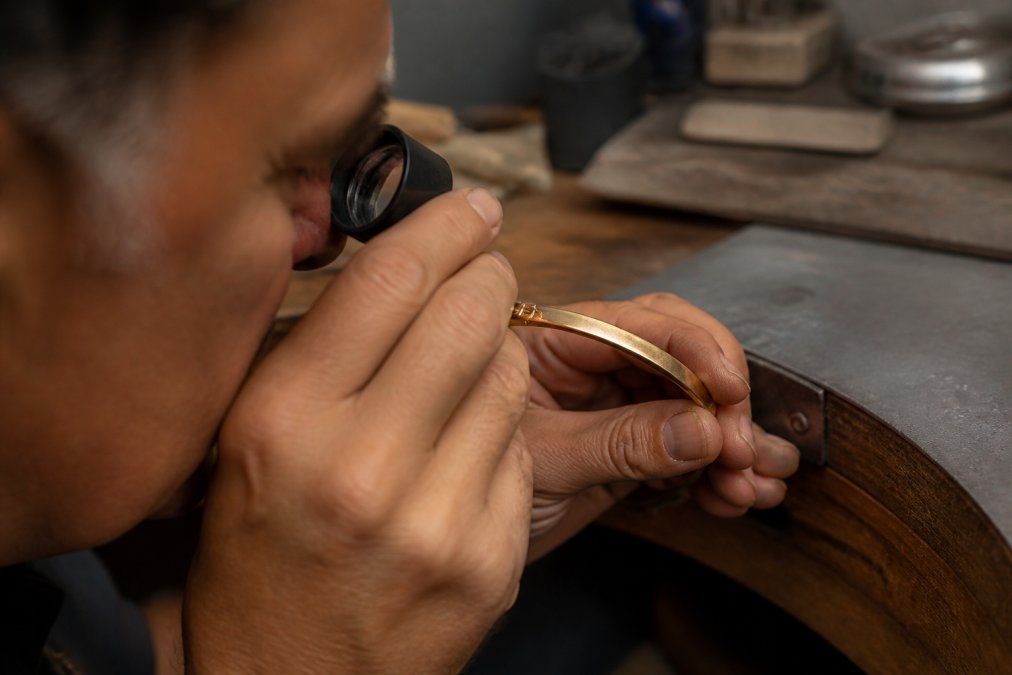
Use your jeweler's loupe to examine the inside surfaces of rings, the clasp area of bracelets, and the back of pendants. USA-made jewelry almost always carries hallmarks. Look for consistent, crisp impressions, counterfeit marks often appear blurry or unevenly stamped. Legitimate hallmarks sit in logical locations, not awkwardly positioned where they'd be uncomfortable to wear.
Different metals require different hallmarks. Gold jewelry should display karat weight (10K, 14K, 18K, 22K). Silver should show "925," "950," or "STERLING." Platinum typically shows "PT" or "PLAT" followed by a number. If a piece claims to be USA-made precious metal jewelry but has no hallmark, that's a red flag.
Maker's marks vary widely and many are registered with the FTC. Research the specific mark you find using jewelry databases and reference books. If you can't identify a mark, photograph it clearly and search online jewelry forums or contact a local jewelry appraiser.
Step 2: Understand FTC Made in USA Standard Requirements
The Federal Trade Commission sets the legal definition of "Made in USA" for all products, including jewelry. According to FTC guidelines on Made in USA claims, a product can be labeled "Made in USA" only if it is "all or virtually all" made in the United States. This means the final assembly, manufacturing, and processing must occur domestically.
The FTC allows for a small amount of foreign content if the overall product is substantially American-made. However, the burden of proof rests with the seller. For jewelry specifically, the materials, fabrication, and assembly must all be domestic. If a ring is designed in New York but the band is cast in Thailand and assembled in the USA, it doesn't qualify as USA-made.
Many jewelry sellers use vague language like "assembled in USA" or "finished in USA" to avoid legal liability. These claims are weaker than "Made in USA." When verifying USA made jewelry, push for clarity. Ask sellers directly: Where were the materials sourced? Where was the piece fabricated? Where was final assembly completed? Legitimate manufacturers answer these questions without hesitation.
The FTC requires that companies have a reasonable basis for their USA-made claims, including documentation, supplier invoices, manufacturing records, and assembly logs. When you request this documentation, you're asking for the evidence the manufacturer should already have.
Step 3: Verify Material Purity and Grade
Material purity directly connects to USA-made authenticity. Gold purity is measured in karats: 10K (41.7% gold), 14K (58.3% gold), 18K (75% gold), and 22K (91.7% gold). Sterling silver is 92.5% pure silver. Platinum jewelry typically contains 95% or higher platinum content.
When you examine the hallmark, verify it matches the piece's appearance. 14K gold has a distinctly different color than 10K gold, more yellow and richer. If the hallmark says 14K but the piece looks pale or whitish, something's wrong. Sterling silver should have a bright, cool tone.
An acid test kit (available online) allows you to test gold purity at home, though it leaves small marks on the jewelry. The safest approach is requesting a professional assay or appraisal. A certified appraiser uses advanced equipment like X-ray fluorescence to verify material composition without damaging the piece. If you're buying from a seller claiming USA-made status, ask if they've had the piece professionally tested.
Step 4: Request and Review a Jewelry Certificate of Authenticity Template
A jewelry certificate of authenticity template is a standardized document that professional jewelers and appraisers use to verify a piece's characteristics. This document should include the type of metal, purity hallmark, weight, gemstone specifications, dimensions, condition assessment, and the appraiser's professional credentials.
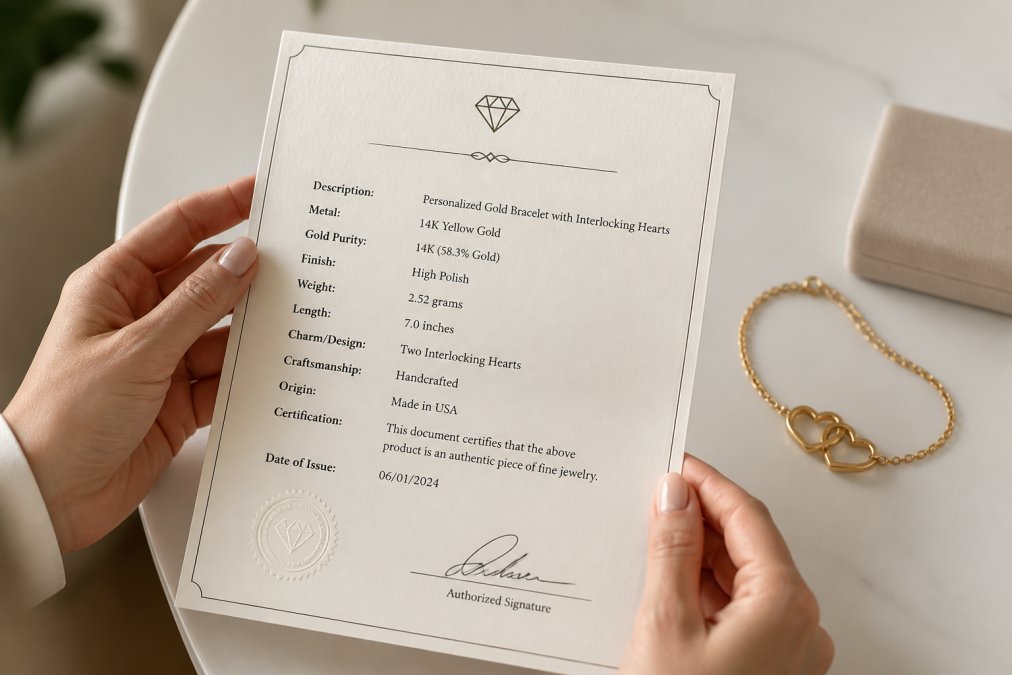
A legitimate certificate identifies the appraiser or jeweler by name and professional credentials, includes the date of appraisal, and describes the piece specifically. For USA-made verification, the certificate should explicitly state where the piece was manufactured and assembled. Some sellers include a "Country of Origin" field on their certificates, this is exactly what you need.
Be cautious of generic certificates or ones that lack specific details. A genuine jewelry certificate of authenticity template is customized to the specific piece and includes the appraiser's signature or official seal. If you're buying new jewelry with a certificate already included, examine it closely and verify the appraiser's name is legitimate.
For heirloom pieces without certificates, consider hiring a professional appraiser to create one. This investment typically costs a few hundred dollars and provides permanent documentation of the piece's authenticity and characteristics.
Step 5: Research Manufacturing Transparency and Supply Chain
Manufacturing transparency separates genuine USA-made jewelry from misleading claims. A legitimate American jewelry manufacturer should be willing to discuss their supply chain openly, explaining where materials come from, which facilities produce components, and where final assembly occurs.
Research the company itself. How long have they been in business? Do they have a physical location you can verify? Many established USA-made jewelry makers have websites showing their workshop, team, and process. Look for supply chain documentation like invoices from domestic suppliers, photos of their workshop, and records of domestic assembly.
Check whether the company holds certifications related to manufacturing transparency. Organizations like the Better Business Bureau track business practices and customer complaints. A company with a strong BBB rating and transparent practices is more likely to be honest about manufacturing location.
True USA-made jewelry means the entire process, material sourcing, fabrication, gemstone setting, finishing, and packaging, happens domestically. For personalized jewelry specifically, manufacturing transparency includes showing where the personalization occurs. Legitimate makers handle customization themselves or partner with verified domestic vendors.
Step 6: Consult an Expert Appraiser if Needed
When you've completed your own verification steps but still have doubts, consulting a professional appraiser is the logical next move. A certified jewelry appraiser has training, credentials, and equipment that go far beyond what consumers can do at home.
Look for professionals certified by the American Society of Appraisers, which maintains strict standards for its members. ASA-certified appraisers have passed rigorous exams and commit to ethical practices.
When you contact an appraiser, explain that you're seeking verification of USA-made claims. They can examine the piece thoroughly, test materials if necessary, research maker's marks, and document their findings in a formal appraisal report. Appraisers can also assess craftsmanship quality, whether joints are secure, gemstones are set properly, and finishes are smooth and even.
The appraisal process typically costs a few hundred dollars depending on the piece's complexity. This investment provides official documentation for insurance, resale, or your own peace of mind. Professional appraisers also maintain networks within the jewelry industry and may recognize specific maker's marks or manufacturing techniques that indicate domestic production.
Common Mistakes to Avoid When Verifying Jewelry Origin
One major mistake is trusting seller claims without independent verification. Always verify independently using the methods outlined above. Don't rely on verbal assurances or casual descriptions.
Another frequent error is misinterpreting hallmarks. Not all marks are hallmarks indicating metal purity. Some stamps are maker's marks or date codes. When you find a mark, research what it actually means rather than assuming.
Many people also fail to distinguish between "made in USA" and "assembled in USA." These are legally different claims. A piece assembled domestically from imported components doesn't qualify as USA-made under FTC guidelines.
Overlooking documentation is another common mistake. Certificates of authenticity, appraisal reports, and sourcing information are valuable verification tools. If a seller can't produce documentation supporting their USA-made claim, that's a red flag.
Some buyers also assume all hallmarks are accurate. Counterfeit hallmarks exist. Examine hallmark quality, crisp impressions, proper placement, and consistent appearance matter. Blurry or poorly executed hallmarks suggest the piece may not be authentic.
Finally, avoid trying to verify everything yourself without professional help. There's a point where consulting an expert appraiser becomes the wisest choice. Professional appraisers have tools and expertise you don't, and their official documentation provides legal weight that your personal observations don't.
Verifying that a jewelry piece is truly USA-made requires attention to detail and a methodical approach, but it's entirely achievable with the right knowledge. When you're selecting personalized jewelry or special gifts through BroSisCo, knowing how to verify USA made jewelry authenticity ensures you're investing in genuine domestic craftsmanship. Our curated selection of personalized jewelry and keepsakes is designed, assembled, and shipped right here in the USA, and we're transparent about our manufacturing process. With our 100% customer satisfaction guarantee, you can shop with confidence knowing your gift celebrates authentic American craftsmanship.
Frequently Asked Questions
How can I verify the authenticity of USA made jewelry without professional help?
Start by examining hallmarks and maker's marks using a jeweler's loupe, checking for proper precious metal stamps (like 14K, 925, or 18K). Request documentation from the seller, including a certificate of authenticity or proof of origin. Research the manufacturer's reputation and verify their FTC Made in USA claims. Cross-reference any serial numbers with the maker's records. If the piece is valuable or you remain uncertain, consult a certified appraiser to confirm authenticity and origin.
What does the FTC require for 'Made in USA' jewelry labeling?
The FTC requires that jewelry labeled 'Made in USA' must be wholly or substantially made in the USA, with all significant parts and processing occurring domestically. The final assembly must happen in the USA, and any imported components must be minimal. Manufacturers must have documentation supporting these claims and cannot make USA origin statements without substantiation. Jewelry marked as 'Made in USA' should come with clear labeling, and sellers must be prepared to provide evidence of manufacturing location if requested by consumers.
What should I look for in a jewelry certificate of authenticity?
A legitimate certificate of authenticity should include the jeweler's or maker's name and contact information, a detailed description of the piece (metal type, weight, gemstones), hallmarks and stamps present, the date of creation or certification, and the certifier's signature or seal. It should specify the manufacturing location, material purity grades, and any treatments applied. The certificate should be on official letterhead and include a unique identification number. Reputable makers provide these documents with purchases, and you should always request one when buying USA made jewelry to verify origin and craftsmanship.
How can I check if a jewelry maker is actually a small USA business?
Research the maker's website and social media for transparency about their manufacturing location and process. Look for detailed information about where design, assembly, and shipping occur. Check if they display certifications or third-party verification of USA production. Request their business registration or FTC compliance documentation. Read customer reviews mentioning craftsmanship quality and turnaround times. Contact the maker directly with questions about their supply chain and production methods. Legitimate small makers are usually transparent about their processes and happy to discuss where and how their jewelry is made.
This article was written using GrandRanker


