


 support@brosisco.store
Table of Contents
- Why Personalized Jewelry Can Look Cheap (And How to Spot It Early)
- Gold Plated vs Gold Vermeil vs Solid Gold: What the Difference Means for Your Gift
- Jewelry Craftsmanship Red Flags to Check Before You Buy
- The Difference Between Costume and Fine Jewelry (And Where Personalized Pieces Fit)
- Visual Checklist for Online Shopping: How to Evaluate Personalized Jewelry Before You Order
- Styling Tips to Make Personalized Jewelry Look Intentional, Not Tacky
- Maintenance and Care Protocols That Protect Your Investment
- Conclusion
Last Updated: August 8, 2026
Why Personalized Jewelry Can Look Cheap (And How to Spot It Early)
Personalized jewelry sits in a tricky spot: done right, it's one of the most meaningful gifts you can give. Done wrong, it screams dollar-store souvenir. The biggest mistake most buyers make is focusing on design and ignoring materials. A beautifully engraved name on a base metal blank will tarnish, flake, and embarrass the wearer within months.
Identifying Low-Quality Metal Alloys and Base Metals
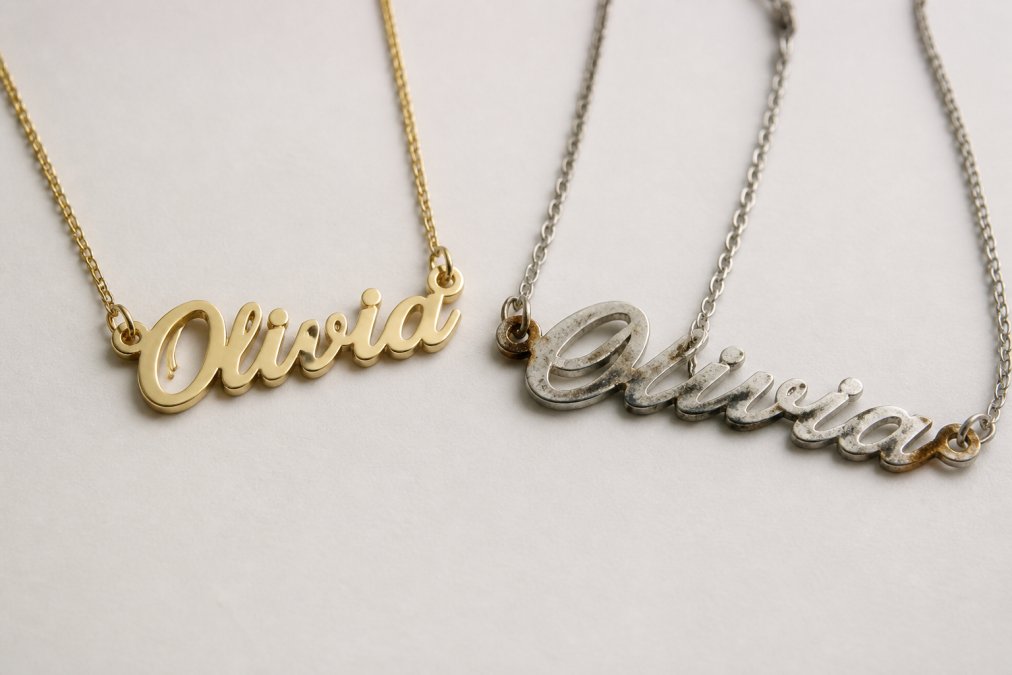
Base metal is the industry term for inexpensive alloys, brass, copper, zinc alloy, or pot metal, used as the core before any surface treatment. The problem arises when they're coated in thin gold or silver and sold as if that coating is the whole story.
What to watch for:
- Greenish discoloration at contact points (copper oxidation beneath the surface)
- Lightweight, hollow feel when held
- No hallmarks stamped on the piece
- Descriptions that say "gold tone" or "silver tone" rather than naming the metal
According to the Federal Trade Commission's jewelry guides, sellers are required to disclose metal content accurately. If a listing avoids naming the base metal entirely, treat that as a red flag.
The Role of Weight and Feel in Perceived Quality
Weight is one of the most reliable quality indicators. Sterling silver and solid gold have genuine density; when you hold a quality piece, it has presence. A hollow piece made from zinc alloy feels toy-like by comparison.

This matters especially for name necklaces and pendants, where lettering needs enough material behind it to hold a clean edge. Thin, stamped letters on lightweight metal lose their crispness quickly with minimal wear.
The practical test: if a product listing doesn't disclose weight, ask. Reputable sellers know their piece weights because quality makers track them.
Gold Plated vs Gold Vermeil vs Solid Gold: What the Difference Means for Your Gift
The gold plated vs gold vermeil vs solid gold distinction is one of the most misunderstood areas in personalized jewelry.
- Gold plated means a base metal is coated with a thin layer of gold, typically less than 0.5 microns thick. It looks beautiful initially but shows wear within months of regular contact with skin, perfume, and moisture.
- Gold vermeil is a specific standard: sterling silver base with at least 2.5 microns of gold plating. The FTC's guidelines on gold vermeil require this minimum thickness for legal vermeil status in the United States. It lasts meaningfully longer than standard gold plating.
- Solid gold (10K, 14K, 18K) contains gold throughout the entire piece. It does not plate, flake, or tarnish, making it the most durable and expensive option.
How Plating Thickness Affects Durability and Appearance
The difference between 0.5 microns and 2.5 microns is not subtle. Thinner plating wears through at pressure points within weeks of daily wear. Thicker plating, particularly vermeil, can last years with proper care.
When shopping, look for sellers who disclose plating thickness in micron measurements. A listing that says "gold plated" without specifying thickness is almost certainly using minimum viable coating.
Jewelry Craftsmanship Red Flags to Check Before You Buy
Poor craftsmanship is the other half of the cheap-looking equation. Even decent materials can look amateurish if construction is sloppy.
Solder Joints, Clasp Durability, and Setting Precision
Solder joints fuse metal components together, where a bail meets a pendant, where a chain ring closes, where a clasp attaches. On quality pieces, these joints are invisible: smooth, flush, and finished to match surrounding metal. On cheap pieces, they're lumpy, discolored, or visibly misaligned.
Clasp durability is the most functionally important indicator. A lobster clasp on a quality necklace should snap shut with a firm click. A flimsy spring mechanism signals the entire piece was built to minimum cost.
Setting precision applies to any piece with stones or engraving. Prongs should be even and symmetrical. Engraved letters should sit at consistent depth and spacing. If product photos show crooked engraving or uneven letter heights, that's exactly what you'll receive.
Common Jewelry Design Mistakes That Make Pieces Look Mass-Produced
Customization alone doesn't make a piece feel special. A name stamped on a generic pendant from a catalog still looks like a catalog item.
Common design mistakes that signal mass production:
- Overly uniform, machine-stamped letter spacing with no variation in depth
- Generic pendant shapes with no design refinement
- Chain styles that don't complement pendant weight or scale
- Engraving that sits on top of metal rather than cutting into it
Quality personalized jewelry uses 3D modeling during design to ensure proportions are intentional. The difference shows in the finished piece: letters with visual weight, pendants with depth, chains that move naturally.
The Difference Between Costume and Fine Jewelry (And Where Personalized Pieces Fit)
Costume jewelry uses base metals, glass stones, and surface finishes prioritizing appearance over longevity. Fine jewelry uses precious metals and genuine stones, built to last decades. Personalized jewelry spans both categories.
Most personalized jewelry sits in the middle, in a category called "bridge jewelry." It uses sterling silver or gold vermeil bases with real metal construction and genuine engraving, but isn't priced or built like heirloom fine jewelry. That's appropriate for the gift category.
What separates a bridge piece that looks fine from one that looks cheap is the quality of the base metal, plating thickness, and construction craftsmanship. A sterling silver name necklace with clean engraving and quality clasp looks like a thoughtful, real gift. The same design on a zinc alloy blank with thin gold plating looks like a gas station gift.

According to the Jewelers of America consumer education resources, understanding metal composition is the single most important factor in evaluating jewelry value and longevity.
Visual Checklist for Online Shopping: How to Evaluate Personalized Jewelry Before You Order
Online shopping for personalized jewelry requires more due diligence than shopping in person. Here's a practical checklist to run through before ordering.
| What to Check | What Good Looks Like | Red Flag |
|---|---|---|
| Metal description | Named alloy: sterling silver, 14K gold, gold vermeil | "Gold tone," "silver tone," no metal named |
| Plating thickness | Micron measurement stated | No thickness disclosed |
| Hallmarks | Stamped 925, 14K, or similar | No hallmark information |
| Clasp type | Lobster clasp, box clasp specified | Generic "secure clasp" with no type |
| Engraving method | Laser engraving or hand engraving stated | "Personalized" with no method described |
| Product weight | Weight in grams disclosed | No weight listed |
| Photos | Multiple angles, close-up of clasp and engraving | Single flat-lay photo only |
Reading Hallmarks, Product Descriptions, and Millimeter Measurements
Hallmarks are small stamps identifying metal composition. A 925 stamp means sterling silver (92.5% pure). A 14K stamp means 14-karat gold. These marks are legally regulated and are a reliable quality signal. If a listing shows no hallmark information, the piece almost certainly doesn't have one.
Millimeter measurements matter for chain width and pendant dimensions. A 1.2mm chain is delicate for small pendants. A 3mm chain is substantial for larger pieces. When these measurements aren't disclosed, you're guessing at proportions, and mismatched proportions make personalized jewelry look off.
Styling Tips to Make Personalized Jewelry Look Intentional, Not Tacky
Even a well-made piece can look overdone if worn without intention. The goal is to let the piece speak, which means everything around it needs to stay quiet.
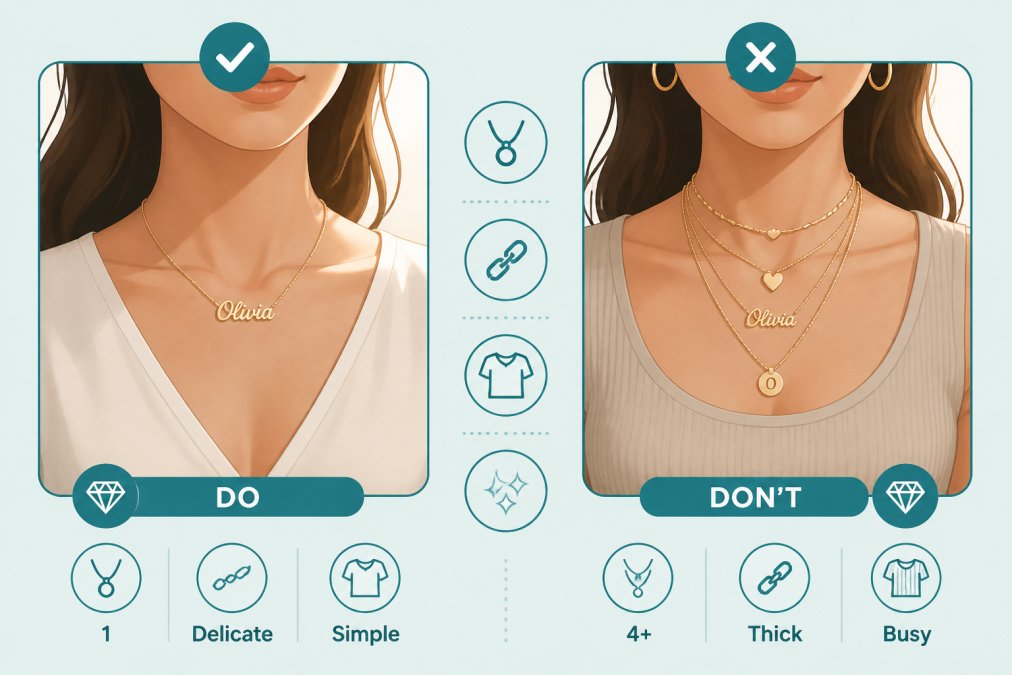
The most common styling mistake: layering too many personalized pieces at once. A name necklace, birthstone ring, initial bracelet, and monogram pendant worn together stop reading as meaningful and start reading as novelty items. Pick one focal piece.

- One personalized piece per outfit, two at most
- Pair a name necklace with plain, unpersonalized earrings or none at all
- Match metal tones: gold with gold, silver with silver
- Scale the chain to the pendant: a large name necklace needs a chain with enough visual weight to balance it
Proper Chain Selection, Sizing, and Avoiding Overly Matchy-Matchy Sets
Chain selection is where personalized jewelry gifts often go wrong. A thin cable chain on a heavy pendant looks precarious. A chunky chain on a small, delicate name pendant overwhelms it.
General guidelines for chain-to-pendant matching:
- Delicate pendants (under 15mm): 1.0-1.5mm cable or box chain
- Medium pendants (15-25mm): 1.5-2.0mm rolo or figaro chain
- Statement pendants (25mm+): 2.0-3.0mm curb or rope chain
An 18-inch necklace sits at the collarbone on most women, the most flattering placement for a pendant. At 16 inches it sits higher on the neck; at 20 inches it drops below the collarbone, better for longer pendants.
Avoid matching sets where necklace, bracelet, and earrings are identical, this reads as costume. A better approach is mixing related but distinct pieces: a name necklace in gold vermeil with simple gold hoop earrings.
Maintenance and Care Protocols That Protect Your Investment
Quality personalized jewelry lasts. Poor care ruins quality jewelry. The biggest enemies of plated or sterling silver pieces are moisture and oxidation, both preventable with basic habits.
For sterling silver pieces:
- Store in an airtight bag or anti-tarnish pouch when not wearing
- Clean with a soft silver polishing cloth, not abrasive materials
- Avoid contact with chlorine, perfume, and lotion; apply cosmetics first, put jewelry on last
- A mild patina on sterling silver is normal and can be polished away
For gold vermeil and gold plated pieces:
- Remove before swimming, showering, and exercising
- Wipe down with a soft, dry cloth after each wear to remove skin oils and sweat
- Never use ultrasonic cleaners or harsh chemical cleaners on plated pieces
- Store separately to avoid scratching
Gold vermeil with proper care outlasts cheap gold plating by years. Even if the gold layer wears thin, the sterling silver base doesn't corrode the way brass or copper does.
BroSisCo's name necklaces, including the Classic Style Name Necklace and the Classic Vertical Name Necklace, are designed, assembled, and shipped from the USA. When investing in a piece meant to last, that traceability matters.
Avoiding cheap looking personalized jewelry isn't about spending more money. It's about knowing what to look for: the right base metal, adequate plating thickness, clean craftsmanship, and intentional styling. BroSisCo offers a curated selection of personalized jewelry built with those standards in mind, backed by a 100% customer satisfaction guarantee and free shipping on orders over $70. Shop the Classic Heart Style Name Necklace or the Signature Style Name Necklace and give a gift that looks as meaningful as it is.
Frequently Asked Questions
What materials make personalized jewelry look cheap?
Base metals like uncoated brass or zinc alloy are the most common culprits. They tarnish quickly, feel lightweight, and often cause skin discoloration. Thin gold-plating under 0.5 microns wears off within weeks, exposing the base metal underneath. Nickel-free labels matter too: nickel in the alloy causes both green skin and faster oxidation. For personalized jewelry that holds up, look for sterling silver, gold vermeil, or solid gold construction with clearly stated metal composition.
How can you tell if personalized jewelry is high quality?
Check for hallmarks stamped into the metal, 925 for sterling silver, 10K, 14K, or 18K for gold. Quality pieces feel substantial in your hand; lightweight items usually signal thin plating over cheap base metal. Examine solder joints and clasps: clean, smooth connections indicate careful construction. For engraved or custom name pieces, look for consistent letter depth and spacing. Reputable sellers will list plating thickness in millimeters and specify whether the piece is nickel-free.
Does gold-plated jewelry always look cheap?
Not automatically, plating thickness is what separates a piece that lasts from one that peels in a month. Standard gold-plated jewelry uses a very thin layer, often under 0.5 microns, over base metal. Gold vermeil, by contrast, requires at least 2.5 microns of gold over sterling silver, making it far more durable. Solid gold is the most durable option but costs significantly more. A well-made gold-plated personalized jewelry piece with proper care can look elegant for years, especially when the base metal is quality brass or silver.
How do you style personalized jewelry to look more expensive?
Keep it simple. One statement name necklace worn alone reads as intentional; layering three mismatched personalized pieces at once tips into bling territory. Match metal tones consistently, gold with gold, silver with silver. Choose a chain weight that suits the pendant size: a delicate name charm on a heavy chain looks off-balance. Avoid overly matchy-matchy sets where every piece is identical in style. Let the personalization be the focal point, and let the rest of your outfit stay neutral.
This article was written using GrandRanker


