


 support@brosisco.store
Table of Contents
- Handmade vs Mass Produced Gifts: The Core Differences
- Quality and Durability Differences
- Cost vs. Value Analysis
- Environmental Impact and Sustainability
- How to Buy Personalized Jewelry Online USA
- The Benefits of Supporting Small Businesses
- How to Identify Authentic Handmade Products
- Maintenance, Repairability, and Long-Term Value
Last Updated: August 25, 2026
Handmade vs Mass Produced Gifts: The Core Differences
The choice between handmade and mass produced gifts shapes what you're giving. This decision isn't just about aesthetics, it's about what the gift communicates to the recipient.
A handmade gift carries intentionality. Someone invested time, skill, and decision-making into its creation. A mass produced gift prioritizes consistency, availability, and affordability through standardized manufacturing processes. Understanding these differences helps you match the gift to the moment.
What Defines Handmade
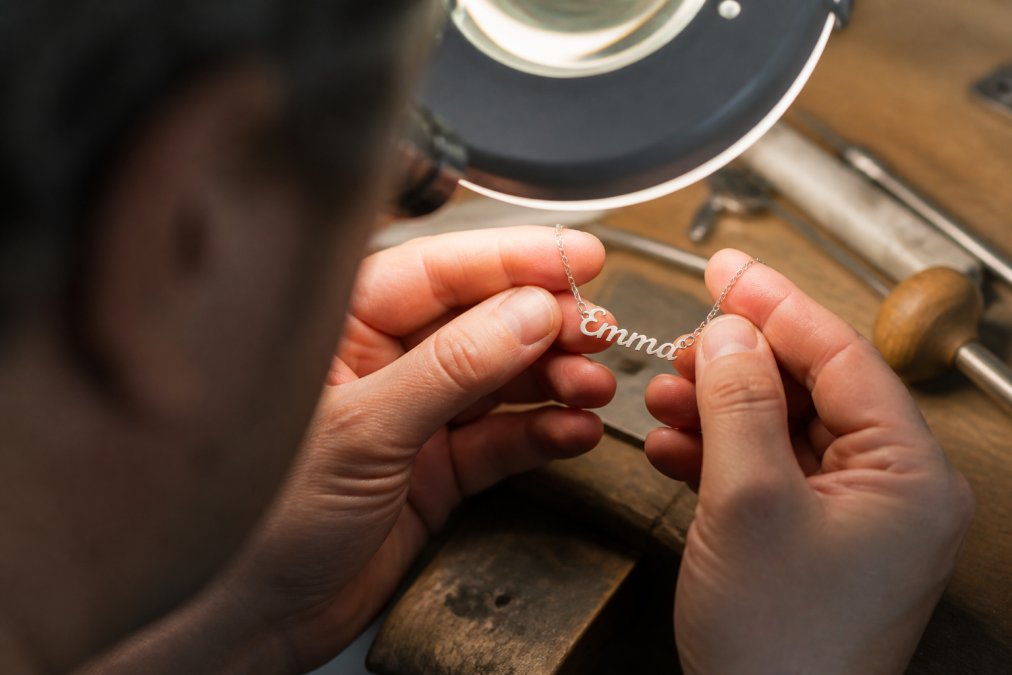
Handmade gifts are created by artisans using manual techniques, often with significant customization. The creator controls materials, design decisions, and quality at every stage. Production happens in small batches or as made-to-order pieces, meaning no two items are identical.
When you buy handmade, you're often supporting a single person or small team directly. The process typically takes weeks or months for bespoke designs, but the result reflects the maker's aesthetic choices and technical expertise. Variations in finish or minor imperfections are often markers of authentic craftsmanship rather than defects.
What Defines Mass Produced
Mass produced gifts flow through standardized manufacturing systems designed for volume and consistency. Factories use machinery, assembly lines, and quality control checkpoints to produce thousands of identical units quickly and affordably.
Mass production drives down per-unit costs dramatically, making quality gifts accessible at lower price points. Supply chains are optimized for speed. The trade-off: individuality gives way to uniformity, and the emotional connection to a maker dissolves into a transaction with a corporation.
Quality and Durability Differences
Both handmade and mass produced gifts can be excellent, but for different reasons.
Handmade items often excel in material selection and construction longevity. An artisan chooses specific materials for durability, not just cost efficiency. A handcrafted necklace might use higher-grade metals or reinforced clasps because the maker's reputation depends on the piece lasting. However, quality varies in the handmade market, a skilled jeweler produces heirloom-worthy pieces, while an inexperienced maker might produce something beautiful but fragile.
Mass produced gifts benefit from rigorous quality control systems. Every unit passes the same tests, and defect rates are tracked. The consistency is genuine. However, mass production optimizes for acceptable quality at a price point, not maximum durability. A mass produced necklace might function perfectly for years but won't necessarily last a lifetime.
Handmade gifts often develop character over time, patina, worn edges, a lived-in quality that adds to their story. Mass produced items tend to either maintain their original appearance or show uniform wear. Neither is inherently better; it depends on whether you value evolution or consistency.
Cost vs. Value Analysis
Handmade gifts typically cost more upfront. A personalized handcrafted necklace might run $75-150, while the same style mass produced could cost $20-40 (peer-reviewed research). This reflects labor, customization, and smaller production volumes.
But cost and value aren't the same thing. For handmade gifts, value includes customization, a maker's story, durability, emotional resonance, and supporting a small business. For mass produced gifts, value includes affordability, reliability, faster delivery, lower risk, and availability.
BroSisCo's personalized jewelry collection, like the Classic Style Name Necklace at $55.65, demonstrates that handcrafted value doesn't require luxury pricing. Made in the USA with customization included, these pieces balance artisan quality with accessible cost. Free shipping on orders over $70 further shifts the value equation.

Environmental Impact and Sustainability
Handmade production typically generates smaller environmental footprints. Production happens locally or regionally, reducing shipping distances. Artisans often source materials thoughtfully and generate minimal waste. A handmade gift made to last 20+ years uses fewer total resources than three mass produced replacements over the same period (the EPA).
Mass production relies on global supply chains with substantial environmental costs. Raw materials, components, and final distribution span multiple continents. Additionally, surplus inventory often ends up discarded in landfills.
However, mass production can be efficient at scale. A factory producing 100,000 units might use fewer resources per unit than an artisan making 100 custom pieces. The sustainability advantage depends on the specific maker or manufacturer, not the production method alone. Investigate where materials come from, how waste is handled, and whether the business prioritizes environmental responsibility.
How to Buy Personalized Jewelry Online USA
Buying personalized jewelry online requires careful judgment. Start by identifying what personalization means to you. Do you want a name engraved? A birthstone added? A custom design created from scratch?
Research the maker's process and timeline. How long does customization take? Can they meet your deadline? A handmade piece might require 3-4 weeks, while mass produced personalization typically ships within 7-10 days.
Review photos of completed pieces, not just design mockups. Look for consistency in quality, finish, and attention to detail across multiple examples. If every photo shows perfect lighting, dig deeper and ask for customer photos or reviews with images.
Verifying USA-Made Claims
"Made in the USA" claims deserve scrutiny. Federal Trade Commission guidelines require that products labeled "Made in the USA" have "all or virtually all" components made and processed in the USA, but enforcement varies (the FTC).
Ask the maker directly: Where are materials sourced? Where is the work performed? Do they have certifications or documentation? Legitimate USA-made producers can answer these questions with specifics.
BroSisCo prioritizes transparency. Their personalized necklaces, including the Signature Style Name Necklace at $55.65, are explicitly designed, assembled, and shipped from the USA. Look for verifications from industry organizations that audit manufacturing claims.

Finding Quality Personalized Options
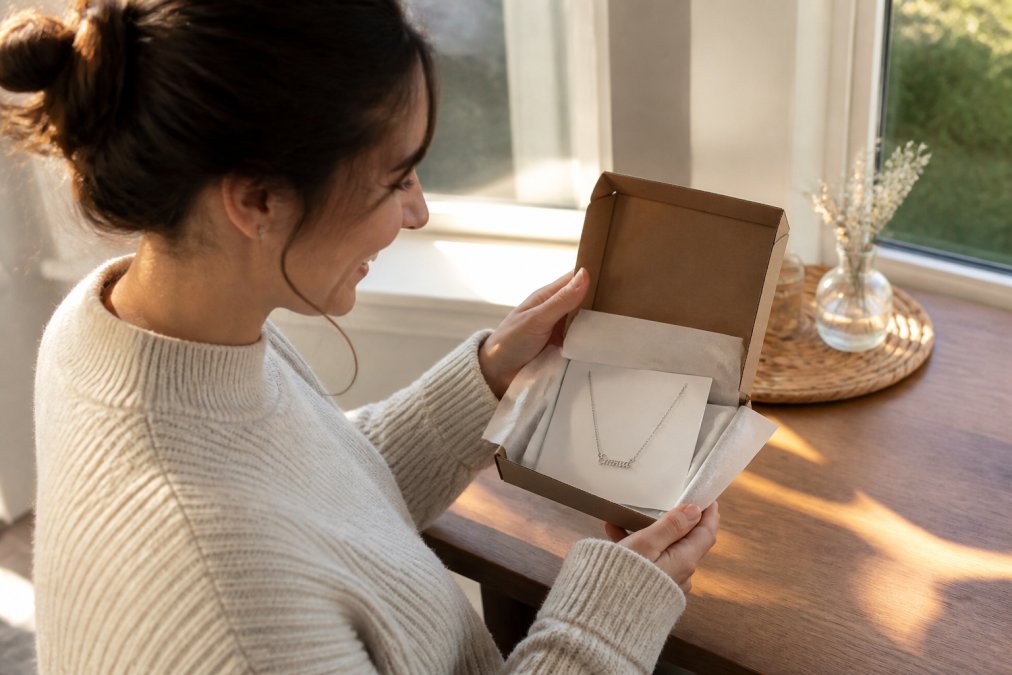
Quality signals matter when you can't inspect the item in person. Look for makers who provide detailed material specifications, show multiple angles of completed pieces, include customer testimonials with photos, offer clear return policies, and communicate clearly about customization limitations.
Compare options across key dimensions: material choices, finish options, font availability for engraving, and customization depth. Price alone doesn't predict quality, but suspiciously low prices often do. The Classic Vertical Name Necklace at $76.54 reflects investment in quality materials and skilled assembly.

Read reviews carefully. Look for mentions of durability, accuracy of personalization, packaging quality, and customer service responsiveness. Patterns reveal reliability.
The Benefits of Supporting Small Businesses
When you purchase from a small maker, your money goes directly to someone's livelihood. An artisan jewelry maker chose to build a business around their craft. Your purchase funds their ability to continue that work and invest in better materials.
Small businesses reinvest locally. The money circulates in the local economy through supplier purchases, rent, and hiring. There's also a values alignment opportunity, many small makers operate according to specific principles like environmental responsibility or ethical labor practices.
Small makers often remember customers and offer personalized service nearly impossible at scale. Supporting small businesses also preserves craft skills. Every purchase signals that these skills have market value, encouraging the next generation to learn.
How to Identify Authentic Handmade Products
The handmade market includes fraud. Some sellers claim "handmade" while dropshipping mass produced items. Others use the term loosely, meaning they assembled pre-made components.
Ask these questions: Who made it? Can you see the process? Are there variations? What's the supply chain? Do they offer customization? What's their communication style?
Authentic makers can tell you their name, background, and process. They often share photos or videos of work in progress. Truly handmade items have minor variations because human hands created them. If every item looks identically perfect, machinery likely played a larger role. Request documentation if the maker claims certifications or special materials. Legitimate artisans are usually happy to provide references.
Maintenance, Repairability, and Long-Term Value
A well-made handcrafted necklace can be repaired. If the clasp breaks, a jeweler can replace it. The piece is designed for longevity and assumes maintenance will happen. Repairability extends life indefinitely.
Mass produced jewelry often isn't designed for repair. The clasp might be permanently affixed or the chain soldered in a way that makes replacement impractical. Repair costs might exceed the original purchase price, making replacement the rational choice.
For personalized gifts specifically, repairability matters emotionally. A necklace with your child's name engraved carries sentimental weight. Handmade pieces, designed with longevity in mind, support that emotional investment.
| Dimension | Handmade | Mass Produced |
|---|---|---|
| Initial Cost | Higher ($50-150+) | Lower ($15-50) |
| Customization | Extensive, bespoke | Limited, preset options |
| Production Time | Weeks to months | Days to 2 weeks |
| Durability | Often excellent, made to last | Acceptable, designed for replacement |
| Repairability | High, designed for maintenance | Low, often irreparable |
| Environmental Impact | Generally lower footprint | Higher due to supply chain |
| Uniqueness | One-of-a-kind or small batch | Identical to thousands of others |
| Support | Direct to maker | To corporation |
| Emotional Value | High, carries maker's intent | Moderate, mass-market appeal |
| Long-Term Value | Increases with age and care | Depreciates with wear |
Choosing between handmade and mass produced gifts depends on what the moment requires. For milestone celebrations, anniversaries, and significant transitions, handmade gifts deliver emotional resonance and lasting quality that justify the investment. When you need something reliable, affordable, and immediately available, mass production excels.
BroSisCo bridges this gap by curating personalized handcrafted jewelry made in the USA, offering the emotional value and quality of artisan work at accessible prices. The Classic Heart Style Name Necklace at $55.65 is customized for your recipient, made domestically with attention to durability, and backed by a 100% customer satisfaction guarantee. With free shipping on orders over $70, you're investing in a gift that will be treasured. Shop now and give something that truly reflects the relationship you're celebrating.
===
Frequently Asked Questions
What are the main benefits of buying handmade gifts?
Handmade gifts offer uniqueness, personalization, and emotional connection that mass-produced items rarely match. Each piece reflects individual craftsmanship and care, making it feel more thoughtful and meaningful. Handmade gifts also support artisans and small makers directly, ensuring your money funds real craftspeople rather than corporate profit margins. The quality of materials and attention to detail typically exceeds what you'd find in factory-made alternatives, resulting in gifts that last longer and hold sentimental value for years.
Is handmade jewelry better quality than mass-produced?
Handmade jewelry generally offers superior quality in materials, construction, and durability. Artisans typically select premium materials and use hand-finishing techniques that mass production skips to save costs. However, not all handmade jewelry is automatically better, the maker's reputation and materials matter. When buying personalized jewelry online, verify the materials and check maker reviews to ensure you're getting genuine craftsmanship.
How can you tell if a gift is truly handmade?
Authentic handmade products show signs of individual creation: slight variations in design, visible hand-finishing marks, and unique characteristics that differ from identical copies. Look for makers who provide transparent information about their process, materials sourcing, and production timeline. Reputable handmade sellers offer detailed product descriptions, maker bios, and can answer specific questions about customization. Avoid sellers claiming handmade status without supporting details or those offering suspiciously fast turnaround on complex custom pieces. Request photos of the actual item being made or finished, and check for certifications or maker credentials when available.
Why are handmade gifts more expensive than mass-produced items?
Handmade gifts cost more because they require skilled labor, premium materials, and time-intensive production. Mass production achieves low prices through automation, bulk material purchasing, and minimal quality oversight, sacrificing durability and uniqueness. Handmade makers invest in their craft, often spending hours on a single piece. You're paying for craftsmanship, personalization, ethical labor practices, and materials that last. When you buy personalized jewelry online from USA makers, you're also supporting local economies and avoiding the environmental costs of overseas shipping. The higher upfront cost reflects actual value: a gift that won't break, tarnish, or feel generic.
What is the environmental impact of mass-produced versus handmade gifts?
Mass production creates significant environmental damage: factory pollution, excessive packaging waste, long-distance shipping emissions, and fast-fashion disposal cycles where items break quickly and end up in landfills. Handmade goods typically use fewer resources, generate less waste, and are built to last decades rather than months. Artisans often source materials more responsibly and produce in smaller batches, reducing overproduction. Handmade items shipped domestically have lower carbon footprints than mass-produced goods manufactured overseas and transported globally. Because handmade gifts endure longer and carry emotional weight, recipients keep them rather than discarding them, further reducing environmental impact.
This article was written using GrandRanker


