


 support@brosisco.store
Table of Contents
- Why Verifying USA Made Products Matters
- Understanding the FTC Made in USA Standard Requirements
- Step 1: Check Product Packaging and Labeling
- Step 2: Learn How to Identify Authentic American Made Jewelry
- Step 3: How to Spot Fake Made in USA Labels
- Step 4: Use Online Directories and Databases
- Step 5: Contact Manufacturers for Verification
- Step 6: The Difference Between USA-Made and USA-Assembled
Last Updated: August 22, 2026
Why Verifying USA Made Products Matters
When you're shopping for a meaningful gift, "Made in USA" suggests quality craftsmanship, fair labor practices, and support for domestic businesses. But the label alone doesn't guarantee any of that. Misleading claims about product origin are common, and without knowing how to verify USA made products, you could easily end up with something assembled overseas and simply packaged here.
At BroSisCo, we understand this concern deeply. Our customers specifically seek out personalized jewelry and home goods that are genuinely designed, assembled, and shipped from the USA. The Federal Trade Commission has documented countless cases of deceptive labeling, where "Made in USA" appears prominently despite significant foreign manufacturing or assembly.
Learning how to verify USA made products protects you as a buyer and ensures your money goes where you intend it to.
Understanding the FTC Made in USA Standard Requirements
According to the FTC's Guides Concerning Made in USA, a product can only carry an unqualified "Made in USA" claim if it is "all or virtually all" made in the United States.
"All or virtually all" means the product's final assembly must occur here, and all significant parts and processing must originate domestically. Foreign components are allowed only if they represent a negligible portion of the final product. For jewelry specifically, this typically means the raw materials, casting, finishing, and assembly all happen in the USA.
The FTC also distinguishes between qualified and unqualified claims. An unqualified "Made in USA" claim means the entire product is American-made. A qualified claim, like "Made in USA from imported materials", tells the consumer that some elements came from abroad.
Step 1: Check Product Packaging and Labeling
Examine the packaging and labeling carefully. Legitimate USA-made products usually make this claim prominently because it's a genuine selling point. Look for the specific phrase "Made in USA" or "Manufactured in USA", not vague alternatives like "Designed in USA" or "Assembled in USA".
The placement and presentation matter. A confident claim appears clearly on the front or back of packaging. Hesitant claims, buried in fine print, or phrased as "Some components made in USA", suggest the company isn't certain of their full compliance. Professional printing signals legitimacy. Blurry text, inconsistent formatting, or labels that look hastily added are warning signs.
Check whether the label includes a city or state of manufacture. "Made in USA in Portland, Oregon" adds credibility. When companies are vague about location, they may be obscuring the fact that only final assembly happened domestically.
Step 2: Learn How to Identify Authentic American Made Jewelry
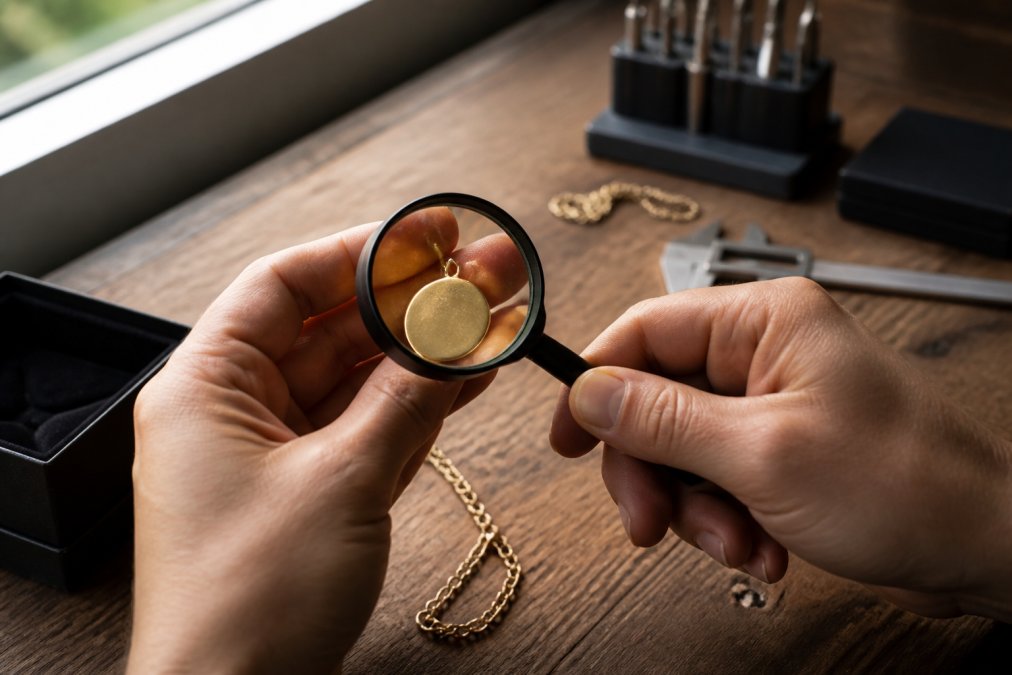
Start with hallmarks and maker's marks. Legitimate USA-made jewelry typically includes stamps indicating metal purity (925 for sterling silver, 14K for gold, etc.) and often a maker's mark or jeweler's initials. These stamps are expensive to add and require precision equipment.
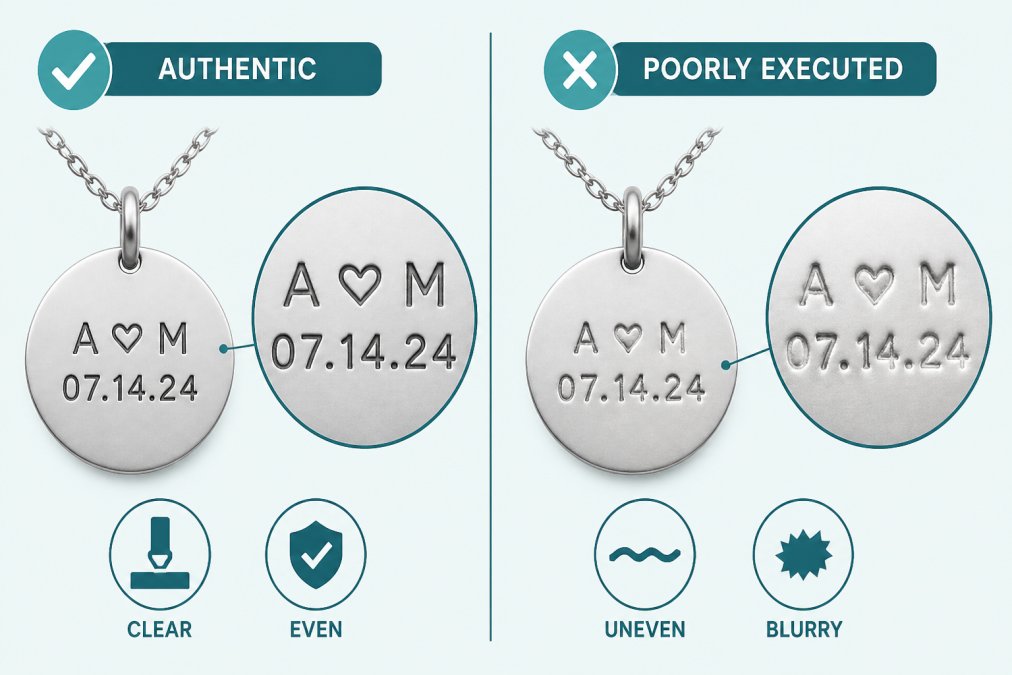
Examine the quality of finishing work. American-made jewelry tends to show consistent, clean finishing. Look at solder joints, polish consistency, and any engraving or personalization. Rough edges, uneven polishing, or sloppy personalization often indicate overseas manufacturing.
For personalized jewelry, consider the personalization method. Laser engraving, hand-stamping, and precision etching are labor-intensive processes that happen mostly in USA-based workshops. When personalization looks slightly imperfect but precise, it suggests hand-work by a skilled American jeweler.
Ask the seller about the jeweler or workshop. Reputable USA-made jewelry companies can name their craftspeople and describe their process. "We work with a family-owned jewelry studio in Colorado" is a real answer. "We have USA-made jewelry" with no further information is a red flag.
Step 3: How to Spot Fake Made in USA Labels
Fake labels often use low-quality printing. If the "Made in USA" text looks blurry, inconsistently colored, or applied unevenly, it may have been added after manufacturing or printed cheaply.
Watch for vague origin language. Phrases like "Proudly Designed in the USA," "USA-Inspired," or "American Style" are not the same as "Made in USA." These qualified claims suggest the design happened here but manufacturing didn't.
Check for missing information. A product that won't say where it's made is avoiding the question. Legitimate USA-made companies are transparent about manufacturing location.
Look at the price relative to comparable products. Genuine USA-made jewelry costs more than overseas equivalents because labor and materials are more expensive domestically. If a "USA-made" item is priced identically to overseas alternatives, someone's cutting corners.
Examine the fine print on packaging and websites. Deceptive brands sometimes hide qualifications in tiny text: "Made in USA from imported components" buried in 6-point font, or "Final assembly in USA" mentioned only in product specifications.
Step 4: Use Online Directories and Databases
The U.S. Customs and Border Protection database allows you to search for import records, which can reveal whether a company is importing finished goods and relabeling them. If a company claims to manufacture domestically but import records show they're importing the exact product they sell, that's definitive proof of deception.
The Federal Trade Commission's consumer protection resources include complaint databases where you can see if other consumers have reported false "Made in USA" claims about a specific brand.
For jewelry specifically, the Responsible Jewelry Council and similar industry organizations maintain directories of certified manufacturers. If a jewelry company is certified by a recognized body, that's meaningful evidence of compliance.
When researching a brand directly, look for supply chain transparency. Legitimate companies publish information about where they source materials, which facilities they use, and how they verify their claims. A company that publishes detailed supply chain information is putting their reputation on the line, which suggests confidence in their claims.
Step 5: Contact Manufacturers for Verification
Don't hesitate to ask directly. Reach out to the company's customer service and ask specific questions about manufacturing. A legitimate USA-made company will answer clearly: "Our jewelry is cast and finished at our facility in Massachusetts" or "We partner with a certified workshop in North Carolina for assembly."
Request documentation. Ask if they can provide certificates of origin, manufacturing agreements, or third-party verification. Legitimate companies often have this documentation and are willing to share it.
Ask about specific components. For jewelry: "Where are your raw materials sourced?" "Who does your casting?" "Is personalization done in-house?" A company confident in their USA-made claim will walk you through the supply chain.
Email is better than phone for this verification. A written response creates a record, and companies are more careful with written claims because they're documented.
Step 6: The Difference Between USA-Made and USA-Assembled
USA-assembled means final assembly happened domestically, but components may come from anywhere. A watch assembled in Texas from Swiss movements and Japanese parts is "USA-assembled" but not "USA-made." Under FTC rules, this claim requires qualification.
USA-made means all or virtually all manufacturing, including parts, materials, and assembly, happened domestically. This is the stronger claim and the one that truly supports domestic industry.
For personalized gifts, this distinction is especially important. A necklace assembled in the USA but cast overseas isn't truly USA-made. A necklace cast, finished, and personalized domestically is.
Companies sometimes use "USA-assembled" language to stay technically compliant while implying full domestic production. Read carefully. "Made in USA" is unqualified and legally requires the higher standard. "Assembled in USA" is qualified and means components came from elsewhere.
Step 7: Know Your Consumer Protections and Recourse
If you discover a company has made false "Made in USA" claims, you have options. The FTC actively investigates and prosecutes false advertising. You can file a complaint through their website, and if enough consumers report the same company, the FTC may take action.
Many states have stronger consumer protection laws than federal law. If you're in one of these states and a company has misled you, you may have legal recourse through your state's attorney general or consumer protection office.
Credit card companies often protect consumers against misrepresented products. If you paid by credit card and the product didn't match the seller's claims about origin, you can dispute the charge.
For high-value items like personalized jewelry, consider purchasing from sellers who offer guarantees. BroSisCo's 100% customer satisfaction guarantee means if you're unsatisfied with authenticity or quality, you have recourse.
Document everything. Keep emails, screenshots of product pages, photos of packaging, and records of your verification attempts. If you need to dispute a charge or file a complaint, this documentation strengthens your case.
Verifying USA made products takes time, but it's the only way to ensure your purchase actually reflects your values. Start with packaging and labeling, move to direct contact with the manufacturer, and use online resources to cross-check claims. When a company is transparent about their supply chain and can answer specific questions about manufacturing, that's a genuine signal of confidence in their domestic production.
The best protection is buying from companies that make transparency part of their brand. At BroSisCo, we design, assemble, and ship most of our personalized jewelry and home goods right here in the USA, and we're happy to explain exactly how we do it. When you shop with confidence in a seller's claims, your gift carries the meaning you intended.
Frequently Asked Questions
What does the FTC 'Made in USA' standard actually require?
The Federal Trade Commission defines 'Made in USA' to mean that all or virtually all components of a product are sourced, manufactured, and assembled domestically. The product's final assembly and processing must occur in the United States, and any foreign components must be negligible. Qualified claims like 'Assembled in USA' have different requirements. Manufacturers must have competent and reliable evidence supporting their origin claims, and deceptive marketing about where products come from violates federal consumer protection laws.
How can you tell if a product is made in the USA versus just assembled here?
A 'Made in USA' claim means all or virtually all manufacturing and assembly happen domestically. 'Assembled in USA' means final assembly occurs here, but some components may be foreign. Check product labeling carefully for exact wording. Contact the manufacturer directly and ask about raw materials and component sourcing. Review import documentation if available. Qualified claims must disclose where significant foreign components come from. Unqualified claims of 'Made in USA' are stricter and require nearly complete domestic production.
How do I spot misleading 'American-themed' marketing on products?
Deceptive marketing uses patriotic imagery, flags, or language suggesting USA origin without clear, truthful labeling. Look for vague phrases like 'American company' or 'American values' without stating where the product is actually made. Authentic USA-made claims include specific labeling on packaging. Misleading products often avoid stating origin entirely or use small, unclear text. If a brand emphasizes patriotism but hides manufacturing details, that's a red flag. Always verify claims through direct contact with the manufacturer rather than relying on marketing language alone.
Are there official databases to check for American-made brands?
The Customs and Border Protection agency maintains import/export documentation that can reveal a product's country of origin. The FTC website offers guidance on how to evaluate origin claims. Many third-party certification organizations and supply chain transparency platforms now publish directories of verified USA manufacturers. Trade associations in specific industries often maintain lists of domestic producers. Start by contacting the manufacturer directly for documentation of their production facility location and supply chain. Government databases require some research skills but provide authoritative verification of import records.
This article was written using GrandRanker


